Drywall Services in Somers, WI — Residential & Commercial Drywall Specialists
Installation, repair, finishing and commercial build-out across Somers, where an 1850 farmhouse and a new industrial buildout can sit two miles apart. Every estimate follows a walkthrough, not a phone description.
Kenosha Elite Drywall is your local resource for drywall work throughout Somers, WI. We help homeowners and property managers here connect with experienced drywall professionals for installation, repair, finishing and commercial build-out.
Somers covers about twenty-five square miles running from the Lake Michigan shoreline inland to I-94, and the drywall work changes as you move across it. The lakefront stretch along Sheridan Road that borders Kenosha directly holds the village's oldest residential building stock, including genuinely pre-drywall farmhouses. The inland stretch toward the interstate is where the new commercial and industrial construction is, and where a written finish schedule matters more than a conversation about paint sheen.
That range is the useful thing to know before quoting anything here. A century-and-a-half-old farmhouse and a new light-industrial office buildout are not variations on one job; they are two trades' worth of different decisions about material, method and sequencing. The walkthrough is where that gets settled, which is a large part of why an estimate here comes from the property rather than from square footage over the phone.
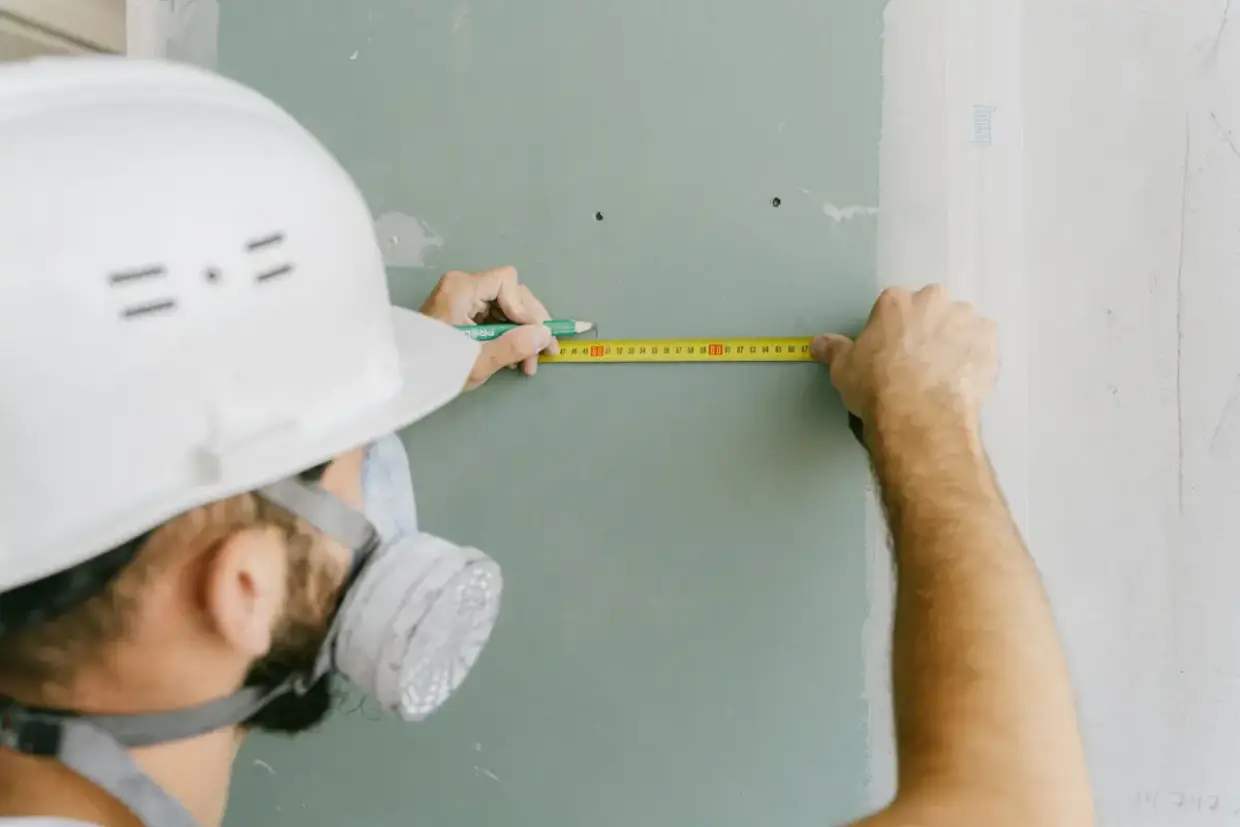
Drywall Services Available in Somers
Drywall Installation
Board hung and finished over open framing — additions, remodels, garages, and whole-house new construction. Panel type gets decided room by room rather than assumed: moisture-resistant where humidity collects, Type X where a rated assembly is required, standard everywhere else. Panels run perpendicular to framing where the layout allows so each sheet crosses more members, seams are staggered rather than stacked, and no joint lands at a door or window corner where movement concentrates and cracks start.
Drywall Repair & Patching
Holes, popped fasteners, opened seams, and damaged panels cut back to solid framing, patched, textured, and primed. The size of the damage decides the method — anything past a few inches needs board with something real to fasten to rather than compound bridging an opening. Repairs batch well: a visit that catches eight defects at once costs far less per defect than eight separate mobilizations, which is why the walkthrough looks at the whole house rather than the one wall you called about.
Ceiling Drywall Repair
Sagging, cracked, or stained ceilings repaired or reboarded after the framing and fastener pattern overhead have been checked. A sag on 24-inch centers is usually half-inch board where five-eighths belonged, and patching it without correcting that just resets the clock. Ceilings are judged from across the room in flat light, the least forgiving viewing condition there is, so a texture match that would pass on a wall still has to be sampled and test-sprayed before it goes overhead.
Drywall Finishing, Taping & Mudding
Tape embedded in a wet bed coat at every seam and inside corner, corner bead set and checked for straightness, then fill and finish coats each feathered wider than the last. Level 4 covers most rooms under flat or eggshell paint. Level 5 adds a skim coat across the entire surface and earns its cost under gloss, under a dark saturated color, or on any wall where daylight travels along the surface at a low angle.
Texture Matching & Popcorn Removal
Knockdown, orange peel, and smooth finishes sprayed fresh or matched into existing work, and popcorn ceilings scraped and reskimmed. Matching means sampling the original and test-spraying on scrap to dial in thinning and pressure — a patch a shade heavy stays visible for as long as the paint lasts. On any ceiling sprayed before the mid-1980s, asbestos testing comes before scraping, and the result sets the schedule rather than the other way around.
Basement & Commercial Drywall
Below-grade finishing and commercial build-out, which share a constraint houses above grade don't: the assembly has to be right before it is closed in. A basement wall needs its moisture path settled and the framing held off masonry. A tenant space runs against fire-rated assemblies, sound ratings between suites, and a finish schedule written into project documents rather than agreed in conversation. Somers gets both halves in volume — below-grade finishing in the older lakefront housing, and new tenant build-out in the industrial space that has grown up along the I-94 corridor.
How a Drywall Job Goes in Somers
- 1
Walk the Space Before Anything Is Quoted
The estimate comes from the room, not from a phone description. Framing gets checked for plane along walls and across ceilings, because a stud bowed a quarter inch out of line telegraphs through finished board and no amount of compound fixes it afterward. Fastener backing gets confirmed at inside corners and anywhere fixtures, cabinets, or grab bars will mount later, since retrofitting blocking means opening a wall that was just finished. On repair work the walkthrough covers the whole house rather than the one defect that prompted the call, because mobilization is most of the cost of a small job and finding the other seven while someone is already on site is what makes the visit worth it. In a pre-1900 Somers farmhouse this step usually turns up irregular stud spacing along with the plaster, so backing and fastener layout get established rather than assumed from a standard 16-inch centre.
- 2
Settle Panel Type, Finish Level, and Texture Up Front
Standard board, moisture-resistant board, and Type X fire-rated board are not interchangeable, and choosing wrong against a garage ceiling or in a bathroom is a mistake that surfaces two years later rather than on install day. Finish level is decided against the room's actual lighting and paint sheen — Level 4 for most walls, Level 5 where light rakes a long surface or gloss paint is going on. Where new board meets existing texture, the existing surface is sampled now rather than at the end, because reproducing knockdown or orange peel takes test passes on scrap to dial in thinning and pressure. Agreeing all three while it is still a conversation is what keeps it from becoming a complaint.
- 3
Hang the Board
Ceilings first, then walls, so wall panels support the ceiling edge and the corner joint closes tight. Panels run perpendicular to framing where the layout allows, which puts each sheet across more members and spreads any movement rather than concentrating it. Seams are staggered so no two joints stack, and joints stay away from door and window corners where stress concentrates and cracks start. Screws go in at the spacing the assembly requires, set just below the paper without tearing it — a screw that breaks the face has lost most of its holding power and will pop through the paint within a season or two. On ceilings, panel thickness follows the framing spacing rather than the price list.
- 4
Tape, Coat, and Let Each Coat Dry
Tape is embedded in a wet bed coat at every seam and inside corner, corner bead is set on outside corners and checked for straightness before anything is built over it, then fill and finish coats go on, each feathered wider than the last so the buildup fades into the surrounding plane instead of stopping at a ridge. Every coat dries completely before the next one goes on. This is the fixed constraint on the schedule and adding people to the job does not shorten it — drying time answers to temperature and humidity, not headcount. Compound applied over a coat that has not dried through shrinks and cracks later, which is why a compressed drywall schedule produces failures that show up months after the painters have left.
- 5
Sand, Match, and Hand Over Clean
Sanding is taken to the finish level agreed at the start, and the result is checked under the room's real lighting rather than a work light. A wall that passes inspection under a bulb held two feet away can still show every seam once the actual fixtures go on and daylight crosses it at a low angle, which is the whole reason the lighting conversation happened first. Where new board meets existing surfaces, the sampled texture is reproduced on scrap, adjusted, and only then applied. Dust gets removed rather than moved around — containment and daily cleanup matter more in an occupied house than in an empty one — and the surface is left genuinely ready for primer instead of nearly ready.
One Drywall Relationship, Not a Rotating Cast
A phone number and a truck in the driveway don't make a company. Here's what's actually different about ours for a job in Somers, WI.
Priced After Someone Sees It
Plaster and drywall sit on the same street here and cost different amounts to repair. A number given before anyone establishes which one you have is a guess, and guesses get revised upward once work starts.
One Relationship, Not a Rotating Cast
This isn't a lead pool that sells your address to three companies. The same experienced drywall professional handles the job from the first walkthrough through the last coat of compound.
Straight Answers About Timing
Sometimes the right advice is to wait — through a heating season on a new build, or for an asbestos result on an old ceiling. You will get told that rather than sold a repair that has to be done again.
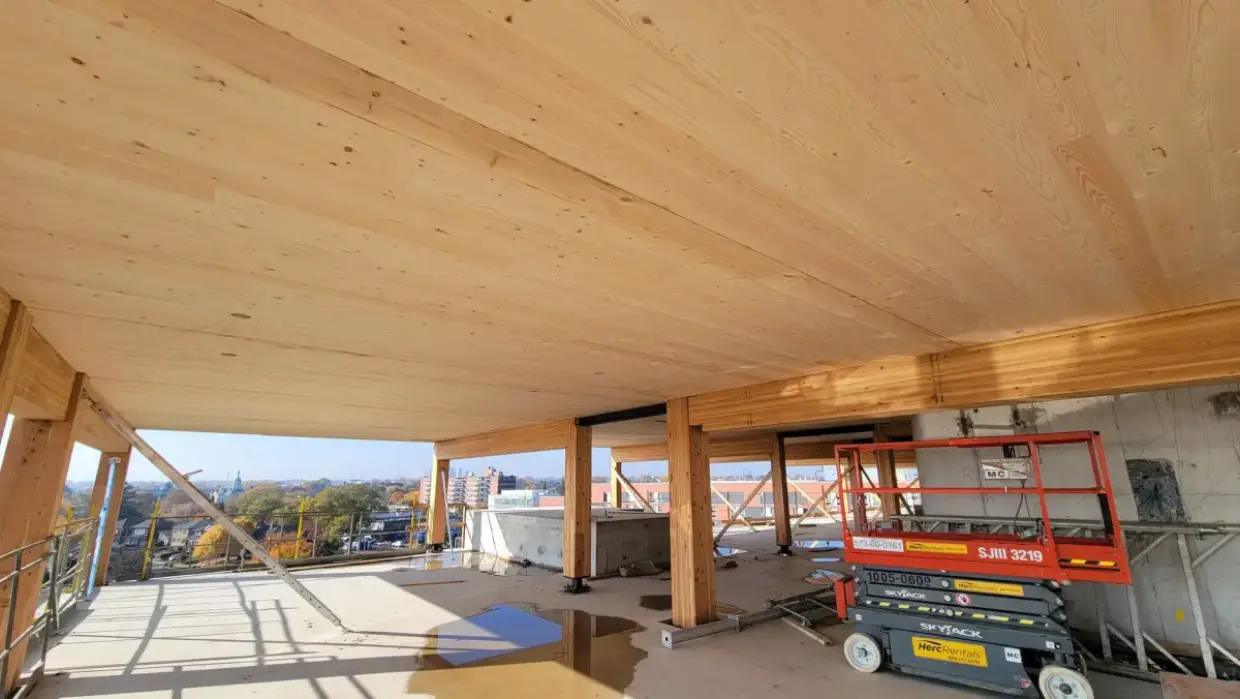
What Drywall Services Looks Like in Somers, WI
Century-Old Farmhouses Along Old Green Bay Road
The Alson Felch Farmstead on Old Green Bay Road dates to 1850 — a Greek Revival farmhouse with a circa-1905 addition documented in the state's historic architecture inventory — and it is not the only house of that vintage along the corridor. Interior walls in a farmhouse that age are plaster over wood lath, and an addition or an opened-up wall means matching a plaster transition rather than butting new board against old board. The other thing that shows up in a house this old is framing that predates any standard: stud spacing is often irregular, so backing and fastener layout get checked rather than assumed.
Institutional Work at the UW-Parkside Campus
The University of Wisconsin-Parkside's 700-acre campus sits in Somers rather than Kenosha proper, despite the common shorthand, and has since the school's first graduating class in 1970. A campus that size runs residence halls, dining space, corridors and department offices that all need finishes rated for institutional traffic rather than residential wear. That means specified finish levels, rated corridor assemblies, and impact-resistant board in high-traffic areas where standard board would be patched every semester — and scheduling that works around an academic calendar rather than around a crew's.
New Industrial and Office Build-Out Near I-94
First Park 94, a 309-acre industrial park on Highway H, and continued spec development along Burlington Road near the interchange have added a real amount of new commercial space to the village. A tenant office or support space inside a warehouse building is drywall work with commercial rules: metal stud framing rather than wood, a finish level written into project documents, rated assemblies where the code requires them, and sequencing against mechanical and ceiling-grid trades that usually sets the schedule more than the hanging does.
Basements and Below-Grade Finishing
Below-grade work in Somers carries the same constraint it does anywhere along this stretch of lakefront: the moisture path has to be settled before board goes anywhere near the wall. Framing gets held off masonry rather than fastened tight against it, moisture-resistant board goes on below-grade exterior walls, and ceiling board routes around ductwork, plumbing and electrical that a first-floor room never has to deal with. Standard board on a below-grade exterior wall is the shortcut that gets discovered two years later, usually by smell before sight.
Where This Comes Up Around Somers, WI
Named Hamlets Along an Old Stagecoach Corridor
Old Green Bay Road follows an early-1800s stagecoach route through the village, passing pioneer-era places still used as local landmarks — Berryville, once known for its strawberry farms, and Kellogg's Corners, first settled in 1837. Those corridors are where the village's oldest, and least standard, framing is concentrated.
A Village Only Since 2015
The area was platted as "Pike" by the territorial legislature in 1843, renamed Somers in 1851, and did not incorporate as a village in its own right until 2015 — a long run as unincorporated township land, which is part of why its building stock is spread thin across twenty-five square miles rather than concentrated in a core.
When We’re Not the Right Call
- A single nail hole or an anchor pull-out. Spackle, a putty knife and twenty minutes will handle that, and paying a service call for it is money lit on fire.
- One small patch called in on its own. Mobilization is most of the cost of a small repair — a $75 to $350 patch turns into a $300 to $500 visit (Angi, HomeGuide 2026) the moment someone has to drive to it. Walk the house first, find the other seven, and get them all done on one trip.
- Hairline seam cracks in a house that went up last year, if you want them gone this month. Framing lumber gives up moisture through its first heating season and those seams will likely reopen. Waiting out one winter and repairing once beats repairing twice.
- A popcorn ceiling in a home built before the mid-1980s, on a same-week timeline. Testing comes before scraping, and the result sets the schedule rather than the other way around.
- Addresses outside Kenosha and Racine Counties and the northern Lake County, IL corridor. Past that range nobody can honestly promise you a scheduling window they will hold, and a promise like that is worth less than a straight no.
Frequently Asked Questions
- Do you serve Somers, WI?
- Yes. Somers sits about 8 miles north of Kenosha along the lakefront and shares a direct border with the city, so it is part of the regularly covered service area rather than a trip outside it. The village runs about twenty-five square miles inland to I-94, and all of it is covered.
- My farmhouse is from the 1800s. Is the drywall approach different?
- Very. The walls are plaster over wood lath rather than board, so new work meeting them needs a skim coat carried across the junction rather than a taped joint at it. The framing is different too — stud spacing in a house from that era is often irregular, so where board fastens and where backing is needed get checked on site rather than assumed. Both of those are walkthrough findings, not phone-estimate findings.
- Do you handle institutional and campus work?
- Yes. Institutional space runs against different requirements than a house — specified finish levels, rated corridor assemblies, and impact-resistant board in high-traffic areas where standard board would need patching every term. Scheduling is usually the harder half of that work, since it has to fit around an operating building rather than an empty one.
- What finish level do I actually need?
- Level 4 covers most rooms under flat or eggshell paint and is the residential default. Level 5 adds a skim coat across the entire surface and earns its cost in specific conditions: gloss or semi-gloss paint, a dark saturated color, or any wall where light travels along the surface at a low angle. In a Somers house with a west-facing window at the end of a long wall, that wall is a Level 5 candidate even when the rest of the house is not.
- How much does drywall work cost in Somers?
- New installation runs $1.50 to $3.00 per square foot of board, with a typical project between $1,000 and $3,254 (Angi, HomeGuide 2026). Patches run $75 to $350 each, though one small repair on its own is more commonly a $300 to $500 visit once mobilization is counted. Plaster work in the older farmhouse stock prices separately, since it is a different method and a slower one.
Learn More
- Gypsum Association GA-214 — the published definition of drywall finish levels 0 through 5
- Wisconsin DSPS Uniform Dwelling Code — the state code governing one- and two-family dwelling construction in Wisconsin
- Wisconsin Admin. Code SPS 321.08 — the fire-separation rule setting the gypsum board options between an attached garage and the dwelling
Need Drywall Services in Somers, WI?
Tell us what’s going on and get an immediate on-site quote — no charge for the estimate, and no obligation to book it.
Get My Free Estimate