Drywall Repair in Kenosha, WI — Holes, Cracks, Nail Pops and Everyday Wall Damage
Damaged board cut back to solid framing, patched, textured to match, and primed across Kenosha and Kenosha County. The goal is a wall where nobody can point to where the repair was.
Drywall Repair in Kenosha, WI
Kenosha Elite Drywall is your local resource for drywall repair throughout Kenosha and Kenosha County. We work with experienced drywall professionals who patch, texture, and blend repairs into the surrounding wall rather than onto it.
Most drywall repair is straightforward work that gets done badly for one reason: the patch is treated as a hole to fill rather than a surface to match. Filling the hole takes twenty minutes. Making the repair invisible under the room's own lighting, with the surrounding texture reproduced and the compound feathered wide enough that no ridge catches the light, is the part that takes skill and the part people notice when it is skipped.
The second thing worth understanding is that some damage is a symptom. A doorknob hole is an event. A seam that has cracked in the same place three times is telling you something is moving, and filling it a fourth time without asking why produces a fifth. Around Kenosha the two most common movement causes are ordinary: houses built in the 1960s and 70s — which is the bulk of the city's stock, with a median build year near 1970 — reaching the age where original fasteners work loose, and newer homes out in Pleasant Prairie and Somers going through their first heating seasons while the framing lumber dries and shrinks.
Repair is the right service when the board around the damage is sound. Where a wall has been patched repeatedly and no longer sits flat, or where the panel itself has failed, replacing the section is the better answer — that is covered on the drywall replacement page.
What’s Included in a Kenosha Drywall Repair Quote
- Damage assessed for whether it is an event or a symptom of movement
- Damaged board cut back square to solid material with backing added where needed
- Patches cut to fit rather than bridged across a gap
- Tape embedded at patch edges so the joint does not telegraph later
- Compound built in coats and feathered wide into the surrounding plane
- Existing texture identified, sampled, and reproduced on scrap before application
- Repair primed so it does not flash under the room's paint
- Dust contained and the work area cleaned rather than swept around
Drywall Repair Services in Kenosha, WI
Drywall Hole Repair & Patching
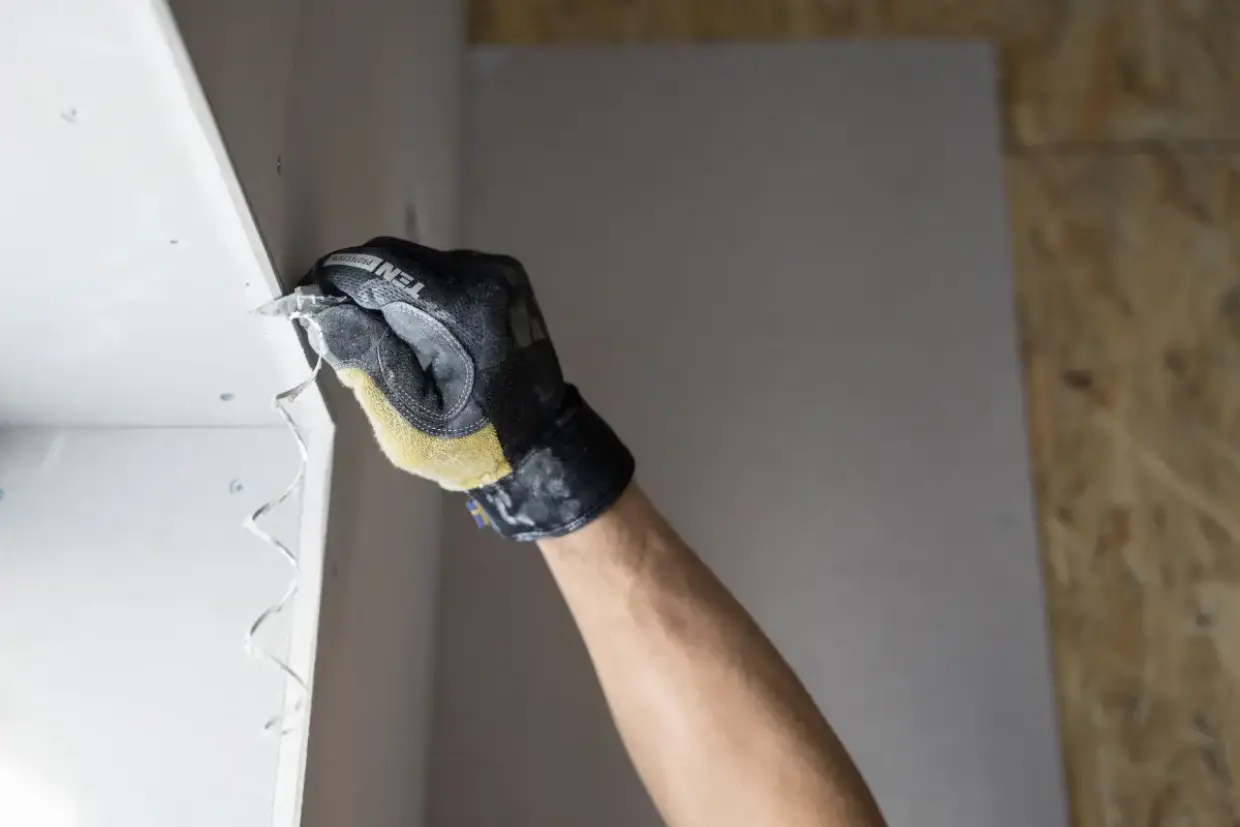
Doorknob holes, foot-through-the-wall accidents, holes left where a TV mount or shelf came down, and the openings other trades leave behind after plumbing or electrical work. The method depends on size. Anything up to a few inches gets cut square and backed so the patch has something to bear on rather than floating on tape. Larger openings get cut back to the centers of the framing members on either side, giving the new piece real support. What decides the result is not the patch but the feathering — compound taken wide enough that the buildup fades into the wall instead of stopping at an edge that catches light.
Drywall Crack Repair
Cracks along seams, at ceiling lines, and radiating from door and window corners. Corner cracks are the most informative: they appear where stress concentrates and they usually mean movement rather than bad taping. A crack that has been filled and reopened needs the cause identified before the fourth repair, because compound has no tensile strength and will fail again at the same line. The durable fix is cutting the joint back, re-taping it properly — paper tape bedded in compound holds a moving joint better than mesh — and in some cases addressing what is moving underneath.
Nail Pop & Screw Pop Repair
The small round bumps or flaked spots that appear in rows following the framing. They happen when a fastener loses its grip and backs out slightly, pushing the compound off with it, and the cause is almost always framing lumber shrinking as it dries. Doing this properly means driving a new fastener an inch or two from the old one into solid framing, setting the original below the surface or removing it, and then coating both. Simply filling the bump leaves the loose fastener in place, and it will push through the new compound within a year.
Torn Drywall Paper Repair
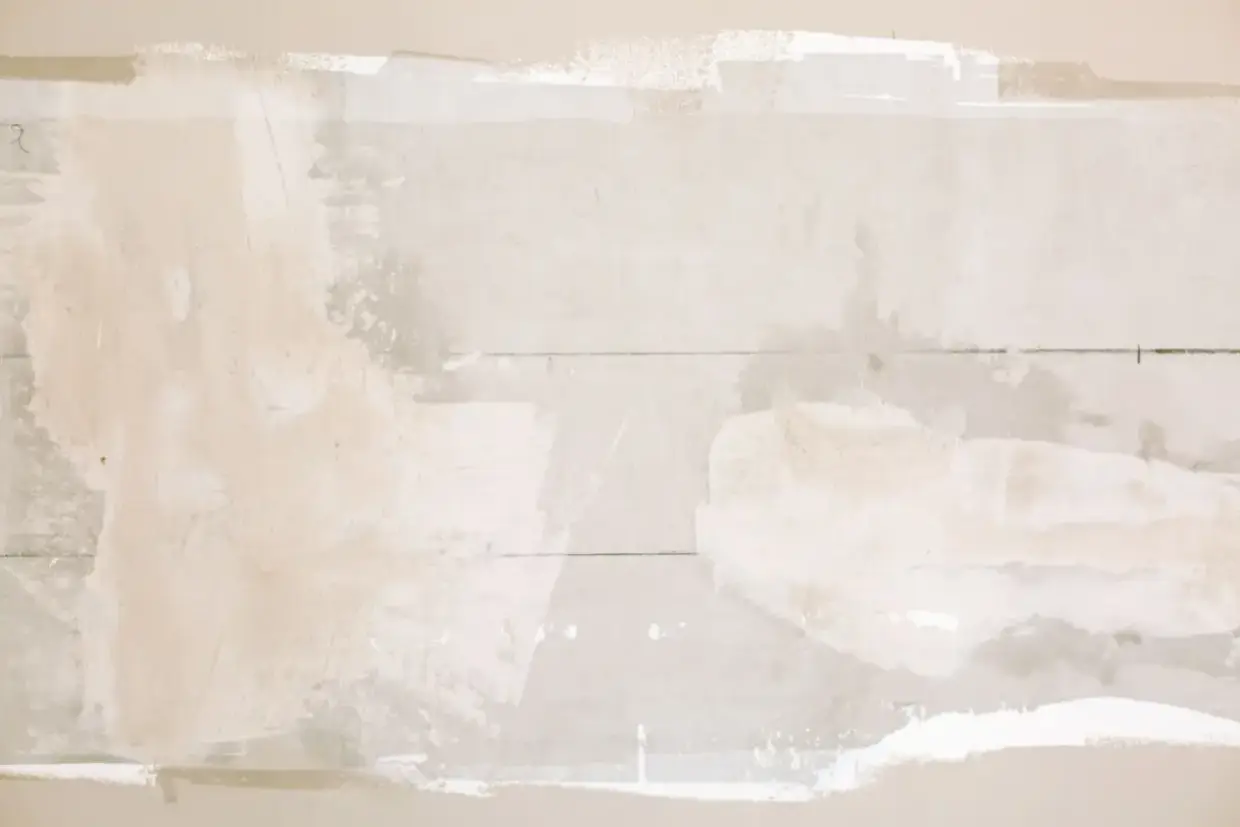
The damage left when wallpaper is stripped badly, tape is pulled off a wall, or a poster mount takes the face paper with it. This needs a specific approach, because the paper face is the panel's strength and the exposed gypsum core underneath is soft and absorbent. Compound applied straight onto torn paper soaks in, bubbles and lifts. The fix is sealing the exposed area with an oil-based or shellac primer first, which stabilizes the surface, and only then skimming and feathering it flat. Skipping the sealing step is why a lot of DIY repairs of this type fail visibly.
Dent & Gouge Repair
Shallow damage from furniture, moving day, vacuum cleaners and general life, particularly along hallways and in stairwells where everything gets carried past the same corner. Individually these are minor; collectively they make a wall look tired. The right treatment is a thin skim across the affected area rather than a series of separate spot fills, because a wall dotted with individual patches reads worse under raking light than the original dents did. Where corner beads have been crushed, the bead itself gets replaced rather than filled over.
Signs You Need Drywall Repair
- Holes or damaged panel sections in an otherwise sound wall
- Cracks radiating from the corners of door or window openings
- Rows of small round bumps following the line of the framing
- Torn face paper left after wallpaper or tape removal
- Accumulated dents and scuffing along a hallway or stairwell
- A seam that has been filled more than twice and keeps reopening
How Drywall Repair Works
- 1
Work Out Whether It Is an Event or a Pattern
Before anything is filled, the damage gets read. A single hole with a clear cause is an event and gets patched. Cracking that follows a pattern — the same seam repeatedly, corners at multiple openings, a line tracking the ceiling — is a symptom, and repairing the surface without identifying the movement produces the same call next year. The common local causes are ordinary and worth naming: original fasteners working loose in homes built in the 1960s and 70s, framing shrinkage through the first heating seasons in newer construction, and seasonal humidity swings that are pronounced this close to the lake. Knowing which one you have changes the repair.
- 2
Cut Back to Something Solid
Damaged material comes out to clean square edges. Small patches get backing installed behind them so the new piece bears on something rather than floating on tape alone, which is the difference between a patch that stays flat and one that cracks around its perimeter within a year. Larger openings get cut back to the centers of the framing members on either side so the replacement piece can be fastened properly. Ragged edges and torn paper around the opening get trimmed, because compound applied over a loose edge lifts as it dries and the repair develops a visible outline.
- 3
Tape, Coat and Feather Wide
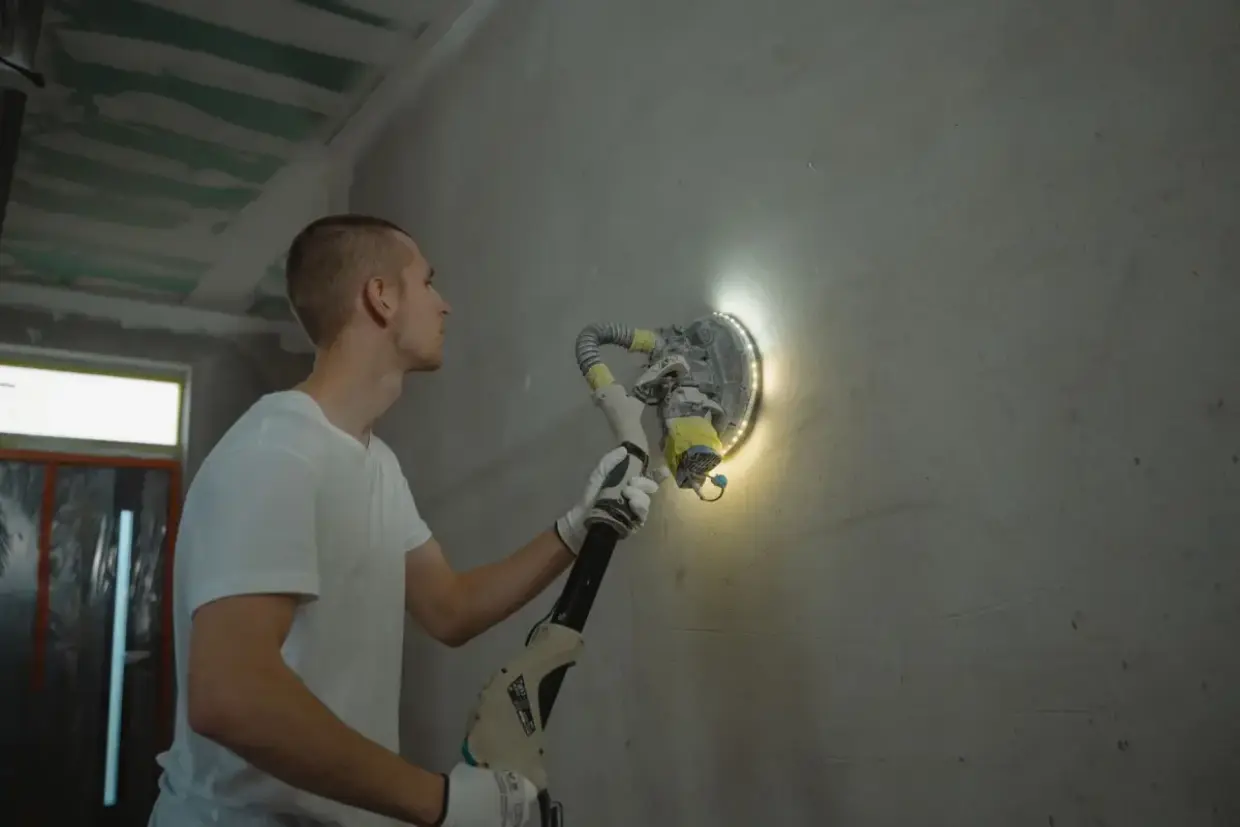
Patch edges get taped and embedded, the same as any seam, because an untaped patch edge is a joint with nothing holding it and it will telegraph. Then compound goes on in coats rather than in one heavy application, each dried through before the next and each feathered wider than the last. Feathering distance is what determines whether the repair disappears: a patch built up over a narrow band leaves a low ridge that raking light finds immediately, while the same patch feathered out over a foot or more fades into the plane and becomes invisible.
- 4
Match the Texture, Then Prime
The existing texture gets identified — orange peel, knockdown, a hand-applied pattern — and reproduced on scrap first, with thinning and spray pressure adjusted until the sample matches the wall rather than approximates it. Only then does it go on the repair. This step is skipped constantly and it is the single most visible tell of an amateur patch. Finally the repair is primed. New compound is far more absorbent than the painted wall around it, so paint applied straight over it dries to a different sheen and the patch shows as a dull shape even when the color matches perfectly.
What Does Drywall Repair Cost in Kenosha, WI?
- Size and number of repairs, since batching several into one visit lowers cost per repair sharply
- Whether the damage is on a wall or a ceiling
- Texture type and how difficult it is to match
- Whether the underlying cause needs addressing rather than just the surface
- Access — height, stairwells, and whether furniture has to be moved and protected
- Whether priming and painting are included or handled separately
- How much drying time the number of coats requires across visits
| Service | Cost Per Sq. Ft. | Typical Job |
|---|---|---|
| New Drywall Installation | $1.50 – $3.00 per sq. ft. | $1,000 – $3,254 per project |
| Small Patch or Hole | $75 – $350 per patch | $300 – $500 for a contractor visit |
| Larger Wall Repair | $500 – $800+ per patch | Scales with how much board comes out |
| Ceiling Repair | $297 – $472 per hole | $220 – $1,300 for the full ceiling |
| Water-Damaged Drywall | $500 – $2,500+ | Depends how far the moisture travelled |
| Texture Matching | $150 – $450 per patch | Runs 30 – 40% above a smooth finish |
Based on 2026 national cost-guide data from Angi, HomeGuide, and Homewyse. Kenosha County rates land above or below these ranges depending on ceiling height, access, and how much board has to come out. The largest single swing here is whether a wall turns out to be plaster rather than drywall, which changes the method rather than just the quantity. You get a firm number after someone sees the job.
The most expensive way to buy drywall repair is one hole at a time. Mobilization, setup, containment and cleanup cost roughly the same whether a visit fixes one patch or twelve, so a list of accumulated damage handled together costs a fraction per repair of the same items called out individually. The other cost driver people do not expect is texture: matching a heavy knockdown or a hand-applied pattern takes sampling, testing and sometimes several attempts, and it can exceed the cost of the patch itself on a smooth wall.
What to Look for in a Kenosha Drywall Repair Contractor
They Ask Why It Cracked
A repeat crack is a movement problem. Someone who fills it without asking what is moving is selling you the same repair again next year.
They Feather Wide
The width of the feather decides whether a patch disappears. Compound built up over a narrow band leaves a ridge that every low-angle light in the room will find.
They Test the Texture Before Applying It
Matching means sampling the original and adjusting on scrap. Spraying straight onto the wall and hoping is how a repair stays visible for the life of the paint.
They Prime the Repair
Fresh compound absorbs paint differently from the wall around it. An unprimed patch shows as a dull shape even when the color is an exact match.
Residential & Commercial Drywall Repair
Residential
Residential repair covers the everyday damage a house accumulates — holes, cracks, popped fasteners, torn paper and dents — plus the diagnostic question of whether a recurring crack has a cause worth addressing. Most of it is a single visit, and most of it is worth batching into one.
Commercial
Commercial repair carries constraints residential work does not: occupied space, rated assemblies that have to be restored rather than just closed, containment standards, and work programmed around trading hours. That is a different job and it is covered on the commercial drywall repair page.
When Drywall Repair Isn’t the Right Call
- Walls that have been patched repeatedly and no longer sit flat. At that point replacing the section produces a better result than another repair — see drywall replacement.
- Damage from an active leak. The source gets fixed and the cavity dries before any board goes back, which is covered on the water-damaged drywall repair page.
- Plaster walls over wood lath, common in Kenosha's older core. That is a different material with a different failure mode — see plaster repair.
- Ceilings that are sagging rather than cracked, which is a fastening or framing question rather than a surface one.
- Addresses outside Kenosha and Kenosha County.
Frequently Asked Questions
- Why do nail pops keep appearing in my house?
- Because the framing behind them is still moving. Lumber installed with moisture in it shrinks as it dries, and as the stud narrows the fastener effectively backs out and pushes the compound off. In new construction this is normal through the first couple of heating seasons and generally settles. In a house from the 1960s or 70s — which describes a large share of Kenosha's stock — a fresh outbreak more often means the original fasteners were nails rather than screws, and nails have far less holding power over decades of seasonal movement.
- Can a crack be repaired permanently or will it come back?
- It depends entirely on why it cracked. A crack from a one-time settlement event, properly cut back, re-taped with paper tape bedded in compound and feathered wide, generally stays fixed. A crack caused by ongoing movement will return no matter how well the surface is repaired, because compound has no tensile strength. The honest answer on a repeat crack is to look at what is moving first — that might be a framing issue, a foundation question, or seasonal humidity — and then decide whether the surface repair is worth doing yet.
- Will the repair be invisible?
- On a smooth wall with a good feather and correct priming, generally yes. On a textured wall it depends on the texture and on whether it was sampled and tested rather than guessed. The hardest cases are heavy hand-applied patterns and large flat areas under raking light, where even a good match can show at certain times of day. Anyone promising a guaranteed invisible repair on a heavy texture without sampling it first has not done the step that makes it possible.
- Should I fix several small repairs at once?
- Yes, and the savings are substantial. Setup, containment, dust control and cleanup cost about the same for one repair as for a dozen, so batching drops the per-repair cost sharply. It also means one round of dust in the house rather than several. Walking the whole place and listing everything — the hallway dents, the closet hole, the ceiling crack, the popped fasteners in the bedroom — before booking is worth doing.
- Do I need to move furniture before a repair visit?
- Clearing the immediate area helps, but it is worth knowing that drywall dust travels much further than people expect. Sanding compound produces very fine particles that stay airborne and settle across a whole room and often beyond it. A repair done properly includes containment at the work area and cleanup that extends past it, but covering nearby furniture and electronics is a reasonable precaution regardless of how careful the containment is.
- Is repair or replacement the better choice?
- Repair makes sense when the surrounding board is sound and the damage is localized. Replacement becomes the better answer when a wall carries several accumulated repairs and no longer sits flat, when the panel has been softened by moisture, or when the same section keeps failing. A useful rule of thumb: once a wall has been patched three times in the same area, the fourth repair is usually more expensive over its remaining life than replacing the section would be.
Learn More
- Gypsum Association — technical guidance on gypsum panel performance, repair and joint treatment
- USG Construction Handbook — manufacturer documentation on joint compounds, tape types and patching methods
- Wisconsin DSPS Uniform Dwelling Code — the state code governing residential construction and alteration
Need Drywall Repair in Kenosha, WI?
Tell us what’s going on and get an on-site estimate — no charge for the visit, and no obligation to book the work.
Get My Free Estimate