Drywall Texturing in Kenosha, WI — Orange Peel, Knockdown and Texture Matching
New texture applied and existing texture matched across Kenosha and Kenosha County, with the pattern reproduced on scrap and adjusted before any of it reaches your wall.
Drywall Texturing in Kenosha, WI
Kenosha Elite Drywall is your local resource for drywall texturing throughout Kenosha and Kenosha County. We work with experienced drywall professionals who sample and test an existing texture before trying to match it.
Texture does two jobs. It gives a wall or ceiling a deliberate surface character, and — the practical part — it breaks up reflected light, which hides the minor variation that a smooth wall would put on display. That second function is why textured walls can be finished to a lower level than smooth ones and still look right, and why texture is so common in the housing built through the middle of the last century.
In Kenosha that history matters. The city's housing has a median build year around 1970, which puts the large majority of local homes squarely in the sprayed-texture era. So the everyday texturing job here is not applying a new pattern to bare board — it is matching what is already on the wall so a repair, an addition, or a remodeled room reads as part of the same house. That is a harder problem than spraying fresh texture, and it is the one people most often underestimate.
Matching is a testing process, not an eyeballing one. Two walls can both be called orange peel and look nothing alike, because the result depends on how thin the compound was mixed, what pressure and tip were used, and how far back the sprayer stood. Reproducing that means sampling the original, spraying scrap, adjusting, and spraying again until the sample matches. A patch sprayed a shade heavier than its surroundings stays visible for as long as the paint lasts.
What’s Included in a Kenosha Drywall Texturing Quote
- Existing texture identified by type and by how it was originally applied
- Sample taken and reproduced on scrap before anything is sprayed on the wall
- Thinning, tip size and spray pressure adjusted until the sample matches
- Substrate finished to the level the texture requires before texture goes on
- Surrounding surfaces, floors and fixtures masked and protected
- Texture applied and, where the pattern requires it, knocked down on time
- Repairs blended out beyond the patch so the transition is not a hard edge
- Surface primed so the texture takes paint evenly across old and new
Drywall Texture Services in Kenosha, WI
Wall Texture Application
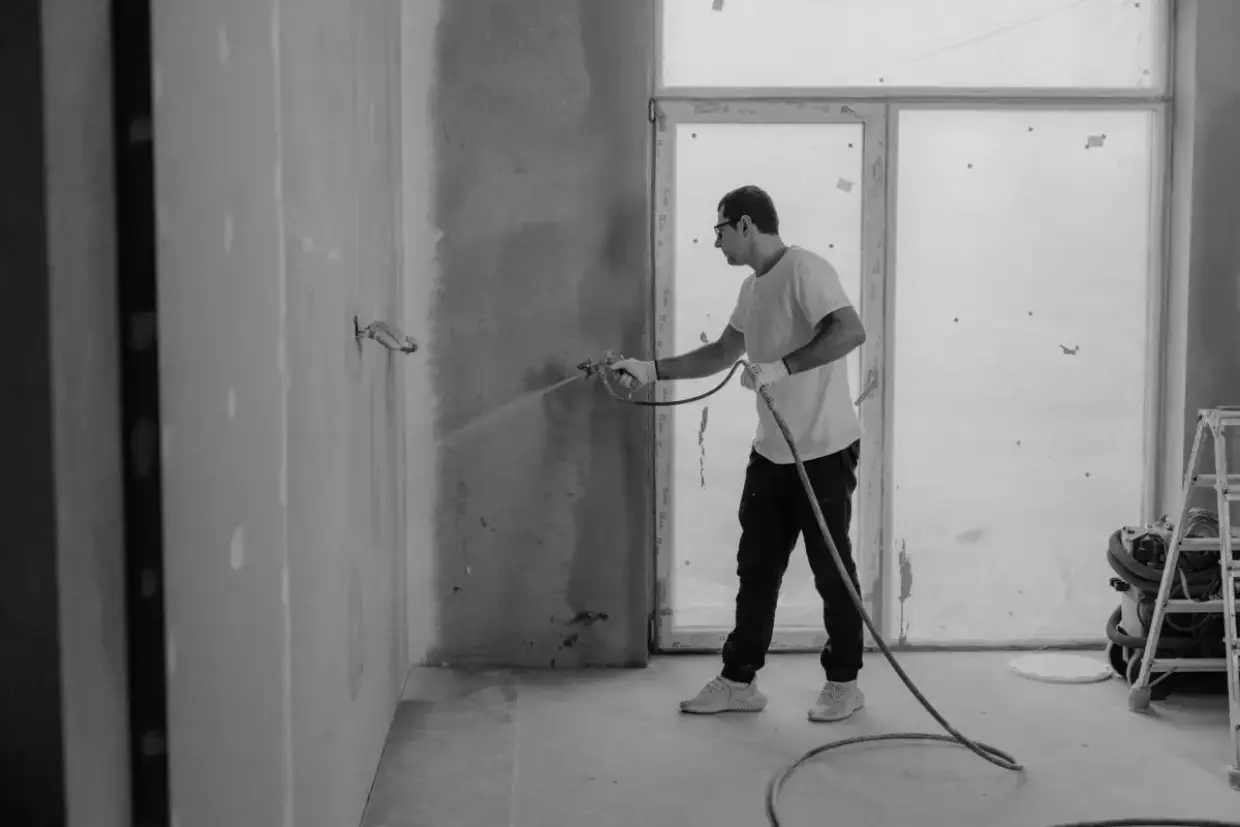
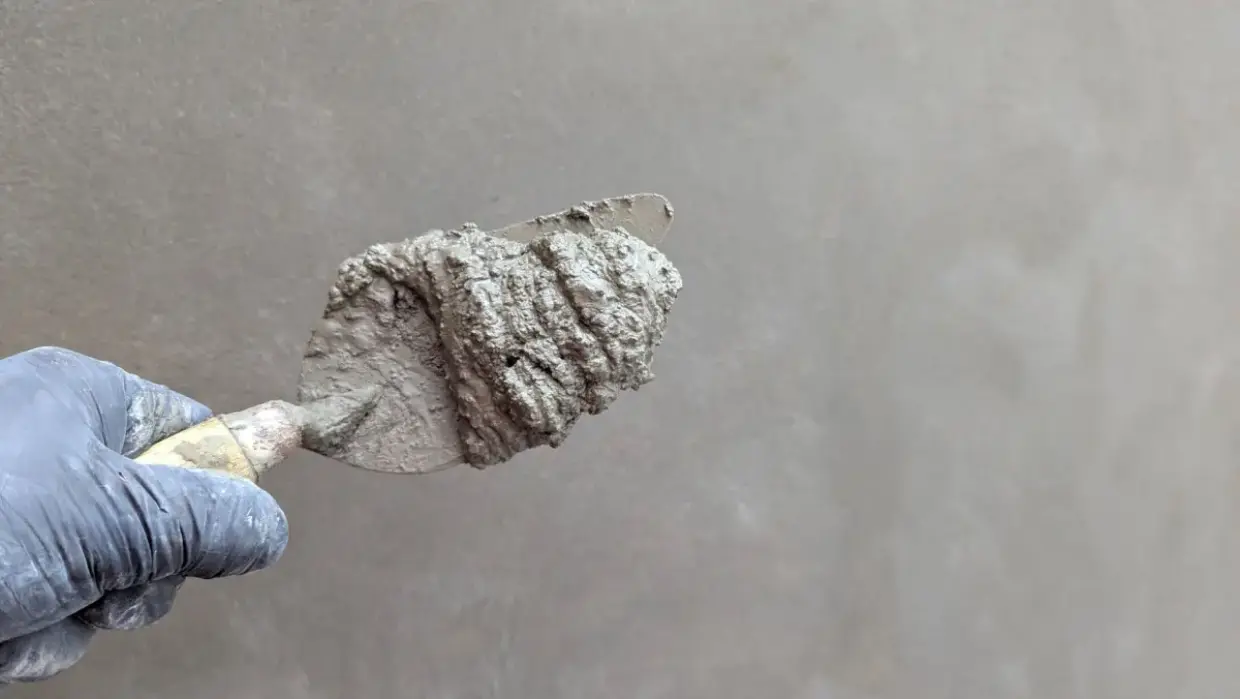
Applying texture to walls, most commonly orange peel — a fine spatter that dries as it lands — or knockdown, which is sprayed heavier and then flattened with a wide blade after it has set for a few minutes. The variables that decide the result are compound consistency, tip size, air pressure and distance from the wall, and changing any one of them changes the pattern. On new work the texture also determines how much finishing the substrate needs underneath: a heavier pattern can go over a Level 3 surface, while a fine orange peel wants Level 4 under it because it hides less than people expect.
Ceiling Texture Application
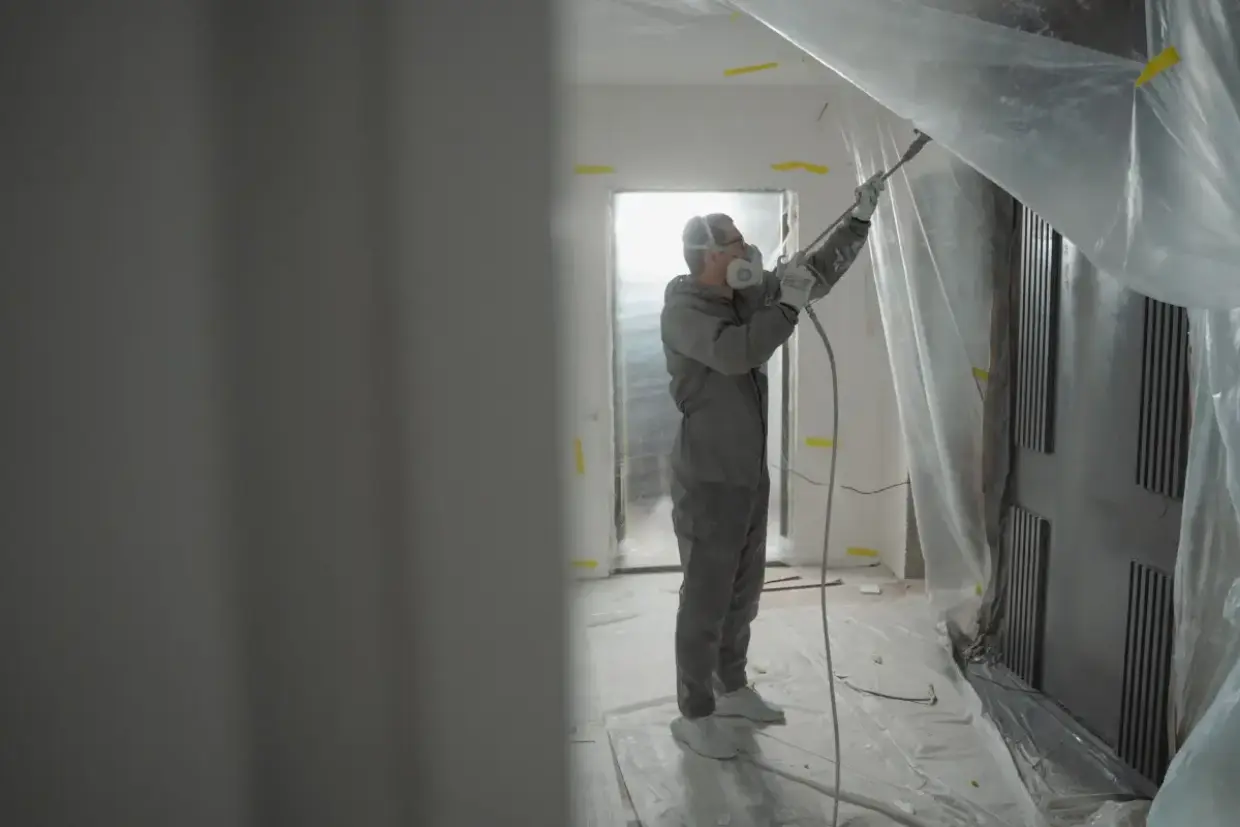
Ceilings are the more demanding surface for texture, because they are viewed from across the room in flat, even light — the condition that shows any inconsistency in the pattern. Overhead spraying is also physically harder to keep uniform, since the operator's distance and angle change constantly while working across a span. On knockdown ceilings the timing window is unforgiving: knock down too early and the pattern smears, too late and it will not flatten. The practical answer is working in sections sized so the whole area can be knocked down inside its window.
Matching Existing Drywall Texture
The most requested texture job in a city where most housing already has texture on the walls. Matching starts with identifying what is actually there — the type, the weight, the era, and whether it was sprayed or hand-applied. Then a sample is reproduced on scrap and compared against the wall in the room's own light, with thinning and pressure adjusted between attempts. Hand-applied and stomped patterns are the hardest, because they carry the marks of one person's technique and reproducing them is closer to imitation than to setting a machine. Anyone matching texture without testing first is guessing.
Drywall Texture Repair
Restoring texture over a patch or damaged area so the repair disappears. The critical detail is the transition: texture that stops at the edge of a patch leaves a visible boundary regardless of how well the pattern matches, because the eye reads the edge rather than the texture. Blending means feathering the new texture out beyond the repair and easing it into the existing pattern so there is no line to find. On knockdown that also means matching the flattening pressure, since two areas with identical spray weight can still look different if one was knocked down harder than the other.
Smooth Wall & Ceiling Finishes
The opposite request, and an increasingly common one: removing texture to get a flat modern surface. This is genuinely more work than it sounds. Texture is skimmed or scraped off, the surface is skimmed flat, and then it has to be finished to a high level — usually Level 5 — because a smooth wall has nothing left to hide behind. Every joint, fastener and plane variation that the texture was concealing becomes visible. It is a legitimate and popular change, and it should be priced as the substantial finishing job it is rather than as texture removal.
Signs You Need Drywall Texturing
- A repair or patch that needs texture to blend into the wall around it
- An addition or remodeled room that has to match the rest of the house
- New board that needs texture to match the existing finish
- A previous repair where the texture visibly does not match
- Texture you want removed in favor of a smooth modern surface
- A ceiling where the pattern is inconsistent across the span
How Drywall Texturing Works
- 1
Identify What Is Already There
Matching starts with naming the texture. Orange peel, knockdown, splatter, a hand-applied or stomped pattern — each has a different application method and a different set of variables. The weight matters as much as the type, since a light orange peel and a heavy one are the same texture applied very differently. Where the house dates from the 1960s or 70s, which covers a lot of Kenosha, the pattern was usually sprayed and is reproducible; where it was hand-worked, the match will be closer to careful imitation. Establishing which of those you have sets expectations honestly before any work is quoted.
- 2
Get the Substrate Right First
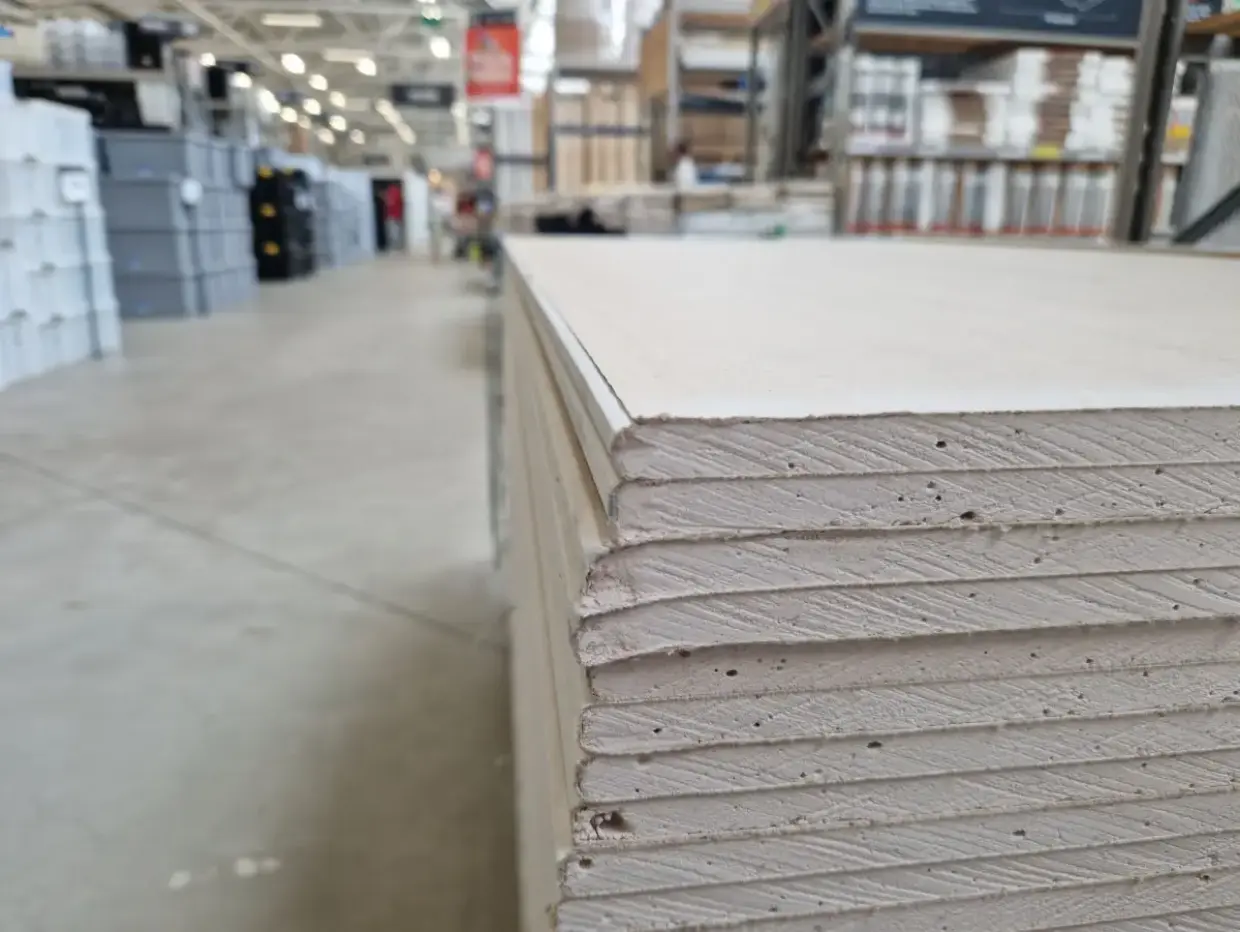
Texture hides some things and not others. It breaks up reflected light, which conceals minor variation in porosity and small imperfections. It does not conceal a plane that is out of true, a ridge of compound at a joint, or a poorly feathered patch — those read straight through the pattern as a shadow. So the surface underneath is finished to the level the texture requires before any spraying happens: heavier patterns can sit over Level 3, lighter ones want Level 4. Spraying texture to cover finishing that was not done is the most common reason a textured wall still looks wrong.
- 3
Sample, Test, Adjust, Repeat
A sample of the existing texture is taken and reproduced on scrap board. The compound is thinned, a tip and pressure are chosen, and a test panel is sprayed and compared against the actual wall in the room's actual light — not under a work lamp. Then the variables are adjusted and it is done again. Two or three iterations is normal on a match, and that time is the reason a good match looks effortless. This step gets skipped constantly and it is the single clearest difference between a repair that disappears and one that is visible from the doorway for the next decade.
- 4
Apply, Blend and Prime
Surrounding surfaces, floors, trim and fixtures get masked, because overspray travels much further than people expect. Texture is applied in sections sized to the pattern's working window — on knockdown that means only as much area as can be flattened before it sets. On a repair the new texture is feathered out past the patch and eased into the existing pattern so there is no boundary line. Then the area is primed, because fresh compound and texture absorb paint differently from the surrounding painted surface, and skipping the primer leaves the repair visible as a change in sheen even when the pattern matches perfectly.
What Does Drywall Texturing Cost in Kenosha, WI?
- Area to be textured, and whether it is walls, ceilings or both
- Texture type, since knockdown and hand-applied patterns take longer than orange peel
- Whether the work is new application or a match to existing texture
- How difficult the existing pattern is to reproduce
- Substrate finishing required underneath before texture can go on
- Masking and protection needed in an occupied room
- Whether the request is to remove texture and finish smooth instead
| Service | Cost Per Sq. Ft. | Typical Job |
|---|---|---|
| New Drywall Installation | $1.50 – $3.00 per sq. ft. | $1,000 – $3,254 per project |
| Small Patch or Hole | $75 – $350 per patch | $300 – $500 for a contractor visit |
| Larger Wall Repair | $500 – $800+ per patch | Scales with how much board comes out |
| Ceiling Repair | $297 – $472 per hole | $220 – $1,300 for the full ceiling |
| Water-Damaged Drywall | $500 – $2,500+ | Depends how far the moisture travelled |
| Texture Matching | $150 – $450 per patch | Runs 30 – 40% above a smooth finish |
Based on 2026 national cost-guide data from Angi, HomeGuide, and Homewyse. Kenosha County rates land above or below these ranges depending on ceiling height, access, and how much board has to come out. The largest single swing here is whether a wall turns out to be plaster rather than drywall, which changes the method rather than just the quantity. You get a firm number after someone sees the job.
New texture on new board is quick and priced accordingly. Matching an existing texture is a different service, because the sampling and testing happen before any productive work does, and on a difficult hand-applied pattern that testing can take longer than the application. The other number that surprises people is smooth: removing texture and finishing flat is not a subtraction, it is a full skim and a high-level finish across the whole surface, and it prices closer to refinishing a room than to texturing one.
What to Look for in a Kenosha Drywall Texturing Contractor
They Spray Scrap Before They Spray Your Wall
Matching is an iterative test. Anyone going straight to the wall is guessing, and a guess that lands a shade heavy is permanent until the wall is refinished.
They Finish the Substrate First
Texture hides porosity variation, not ridges and out-of-plane surfaces. Spraying over unfinished work leaves a shadow that reads straight through the pattern.
They Blend Past the Patch
Texture stopping at a patch edge leaves a visible boundary even with a perfect pattern match. The eye finds the line, not the texture.
They Tell You What Smooth Actually Costs
Removing texture means skimming and finishing the entire surface to a high level. A quote that treats it as a removal job has not accounted for what gets exposed.
Residential & Commercial Drywall Texturing
Residential
Residential texturing here is dominated by matching rather than new application, because most Kenosha housing already has sprayed texture on it. That makes sampling and testing the core of the service rather than an optional refinement.
Commercial
Commercial texture work runs to specified patterns across large continuous areas where consistency across a span finished on different days is the main difficulty. Commercial surfaces are also more often specified smooth, which shifts the work to finishing rather than texturing.
When Drywall Texturing Isn’t the Right Call
- Walls where the underlying finishing has not been done. Texture will not hide a ridge or an out-of-plane surface, it only textures the shadow.
- Popcorn ceiling texture you want removed, which starts with asbestos testing and has its own page.
- Hand-applied patterns where an exact match is required rather than a close one. A hand pattern carries one person's technique and can be approached but not duplicated.
- Projects where texture is being used to avoid paying for finishing. The saving is visible from the doorway.
- Addresses outside Kenosha and Kenosha County.
Frequently Asked Questions
- Can any existing texture be matched?
- Sprayed textures — orange peel, knockdown, splatter — can be matched closely with sampling and testing, and on a well-executed match most people cannot find the repair. Hand-applied and stomped patterns are harder, because they carry the working habits of whoever applied them originally: the angle they held the tool, how hard they pressed, the rhythm of the pattern. Those can be approached very closely but honestly not duplicated exactly, and a contractor who promises otherwise on a hand pattern is overselling.
- What is the difference between orange peel and knockdown?
- Application method. Orange peel is sprayed and left alone, drying as a fine spatter that looks like the skin of the fruit it is named for. Knockdown is sprayed heavier and then flattened with a wide blade after a few minutes, which spreads the peaks into flat mottled shapes. Knockdown is the more forgiving of the two on an imperfect substrate because the pattern has more depth, and it is also less forgiving in application because the knock-down timing window is short.
- Why does my patch still show even though the texture matches?
- Two likely reasons. The first is the transition — texture that stops at the patch edge leaves a boundary line, and the eye finds the line rather than judging the pattern. Blending means feathering the new texture out past the repair into the existing pattern. The second is priming: fresh compound and texture absorb paint differently from a wall that has been painted for years, so an unprimed repair reads as a change in sheen even when the pattern is a perfect match.
- Should I remove the texture in my house?
- It is a legitimate and increasingly popular change, and it is a bigger job than it sounds. Texture is doing work: it breaks up reflected light and hides minor variation. Take it off and everything it was concealing becomes visible, so the surface has to be skimmed flat and finished to a high level — usually Level 5 — across the whole area. Priced honestly it sits closer to refinishing a room than to removing something from it. If you want it, it is worth doing properly rather than half way.
- Does texture affect what finish level I need underneath?
- Yes, and it generally lowers it. A heavy knockdown typically goes over a Level 3 substrate because the pattern's depth conceals joint variation. A fine orange peel wants Level 4 underneath, since it hides less than people assume. Smooth walls are where the level question becomes serious, and that is part of why smooth finishes cost more than textured ones over the same area — the finishing underneath has to be better.
- How long does texture take to dry before painting?
- Usually overnight in ordinary conditions, though it depends on how heavily it was applied, the temperature and the humidity. Heavier knockdown patterns hold more material and take longer than a light orange peel. In a humid Kenosha summer it stretches; in winter with the heat running it shortens. The relevant point is that texture needs to be fully dry before priming — painting over texture that is still damp underneath produces adhesion problems that show up as flaking later rather than immediately.
Learn More
- USG Construction Handbook — manufacturer documentation on texture compounds, spray equipment and application
- Gypsum Association — technical guidance on surface preparation and decoration of gypsum panels
- Association of the Wall and Ceiling Industry — trade association guidance on texture application practice
Need Drywall Texturing in Kenosha, WI?
Tell us what’s going on and get an on-site estimate — no charge for the visit, and no obligation to book the work.
Get My Free Estimate