Plaster Repair in Kenosha, WI — Cracked, Loose and Damaged Plaster Walls and Ceilings
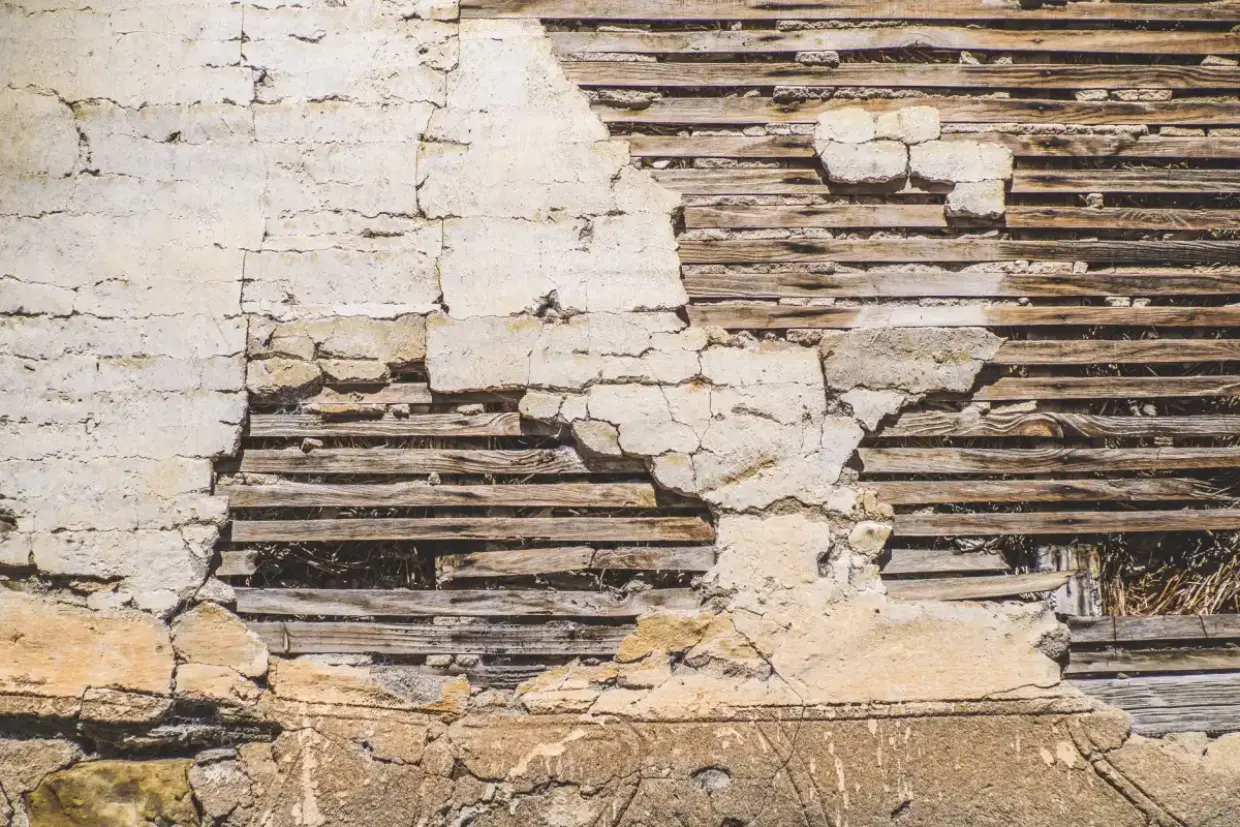
Plaster over wood lath assessed for whether it is still keyed to the lath, then patched, re-anchored or converted to board across Kenosha and Kenosha County.
Plaster Repair in Kenosha, WI
Kenosha Elite Drywall is your local resource for plaster repair throughout Kenosha and Kenosha County. We work with experienced professionals who check whether plaster is still attached to its lath before deciding how to repair it.
Plaster is a different material from drywall with a different failure mode, and treating it like drywall is why so many plaster repairs come back. Traditional plaster was applied in coats over wood lath — thin strips nailed across the studs with gaps between them. The first coat was pushed through those gaps and slumped over behind the lath, forming keys that hooked the whole wall in place. Everything about plaster's condition comes down to whether those keys are intact.
So the first question on any plaster job is not what the crack looks like, it is whether the plaster is still attached. A wall can be badly cracked and perfectly sound, needing only surface work. A wall can look almost fine and be hanging on nothing, because the keys have snapped and the plaster is resting against the lath rather than gripping it. Press on it: sound plaster feels solid, failed plaster moves and gives a hollow response. Skim-coating a wall whose keys are gone is money spent on something that will detach anyway.
In Kenosha this work concentrates in a specific area. Roughly a fifth of the city's housing predates 1940, and in the older core around downtown, Library Park and the Third Avenue neighborhoods that share rises to about a quarter. Those are the streets where original plaster is still on the walls, and where the practical question is usually how much of it is worth keeping.
What’s Included in a Kenosha Plaster Repair Quote
- Plaster tested for whether it is still keyed to the lath before anything is patched
- Crack pattern read for movement versus ordinary age cracking
- Loose plaster re-anchored to the lath with plaster washers where it can be saved
- Failed sections removed back to sound material and to framing
- Lath inspected and repaired or replaced where it has broken or rotted
- Patches built in coats using compatible material rather than modern compound alone
- Plaster-to-board junctions skimmed across rather than butted and taped
- Surface matched to the original texture and finish before priming
Plaster Wall & Ceiling Repair in Kenosha, WI
Cracked Plaster Repair
Not all plaster cracks mean the same thing. Fine hairline crazing across a surface is usually age and shrinkage in the finish coat, and it is cosmetic. Straight cracks running from door and window corners are stress concentration, common in houses that have been settling for a century. A crack that follows a lath line, or one that has a lip where one side sits proud of the other, means the plaster is moving relative to its backing and the keys in that area are likely gone. Filling all three the same way means two of them return, which is why reading the crack comes before repairing it.
Plaster Wall Patching
Repairing holes and missing sections in a wall that is otherwise sound. The method depends on depth, since traditional plaster is thicker than drywall — often three quarters of an inch or more — and a patch that only fills the top layer leaves a weak shell over a void. Where the lath is intact, the patch is built in coats to match the original thickness. Where the lath is broken, it gets repaired or backed first. Modern setting compound can do a lot of this work, but a deep patch built entirely from lightweight compound will crack at its perimeter as the two materials move differently.
Plaster Ceiling Repair
Plaster ceilings are the most urgent version of this work, because a ceiling is holding its own considerable weight overhead purely through its keys. When those fail, a section of plaster can come down all at once, and plaster is heavy. A ceiling that is bulging, that sounds hollow across an area, or that has a visible sag needs assessing promptly rather than at leisure. Where a ceiling is sound but cracked it can be repaired in place; where the keys have gone over a large area, re-anchoring with plaster washers into the joists or removing and reboarding are the two honest options.
Loose & Damaged Plaster Repair
Plaster that has come away from its lath but is still in place. This is the situation where the right move is often re-anchoring rather than removal: plaster washers screwed through the plaster into the lath or the framing pull the material back tight and hold it, and the washers are then skimmed over and disappear. It saves original plaster, keeps the room's character, and costs considerably less than replacing the wall. It works when the plaster itself is still intact — where the material has become soft, crumbling or water-damaged, re-anchoring has nothing to hold.
Plaster-to-Drywall Repairs
The junction where old plaster meets new board, which happens on every remodel in an older house. The two surfaces are different thicknesses and different materials, and butting them together with tape produces a visible line and a crack within a season. The correct approach is a skim coat carried well across the junction so the transition happens gradually rather than at a seam, with the board shimmed out where necessary to bring the two planes level. Done properly the wall reads as one surface. Done as a taped joint, it announces exactly where the remodel stopped.
Signs You Need Plaster Repair
- Plaster that moves or sounds hollow when pressed
- A visible bulge or sag in a wall or ceiling surface
- Cracks with a lip, where one side sits proud of the other
- Fine crazing across a large area of an older wall
- Plaster crumbling or turning powdery at an edge
- A remodel where new board has to meet original plaster
How Plaster Repair Works
- 1
Test Whether the Keys Are Intact
Before anything else, the plaster is checked for attachment. Hand pressure across the surface tells you a lot — sound plaster is rigid and quiet, failed plaster flexes and sounds hollow. The extent gets mapped, because it is common for one area of a wall to have lost its keys while the rest is perfectly sound, and there is no reason to remove good original plaster. Where there is attic or adjacent access, looking at the back of the lath is worth doing. This assessment decides everything downstream: surface repair, re-anchoring, or removal and reboarding.
- 2
Read the Cracks
Crack patterns are diagnostic in plaster even more than in drywall. Hairline crazing across a broad area is finish-coat shrinkage and is cosmetic. Cracks from opening corners are structural stress and will reopen unless the movement is addressed or the repair is detailed to accommodate it. Cracks following the lath lines, or cracks with a lip, indicate the plaster is moving against its backing. In houses around Kenosha's older core, a century of seasonal cycles means some cracking is simply expected — the useful distinction is between cracks that have stopped moving and cracks that have not.
- 3
Re-Anchor, Patch or Convert
Where plaster is intact but detached, plaster washers are screwed through into lath or framing to pull it back and hold it, and they are then skimmed over. Where sections have failed, they come out back to sound material and to a framing member, and the lath behind is repaired or backed. Where a whole wall or ceiling has lost its keys, the honest recommendation is often removal and reboarding, because chasing failure across a large area costs more than replacing it and delivers a worse result. That recommendation is made plainly rather than avoided because it is a bigger job.
- 4
Build the Surface Back and Match It
Patches are built in coats to the original thickness rather than filled in one pass, using materials compatible with what is there — a deep patch made entirely of lightweight compound moves differently from the plaster around it and cracks at its perimeter. At plaster-to-board junctions the transition is skimmed across a wide band instead of taped at a seam. Then the surface texture is matched, which in older Kenosha homes often means a hand-troweled finish with a subtle character that a flat modern skim does not reproduce. Finally the repair is primed, since fresh material absorbs paint very differently from century-old plaster.
What Does Plaster Repair Cost in Kenosha, WI?
- Whether the plaster is still keyed to the lath or has detached
- Area affected and whether the failure is localized or widespread
- Wall versus ceiling, since ceiling plaster work is heavier and slower
- Whether lath behind the plaster needs repair or replacement
- Depth of the patch and how much material has to be built back
- Difficulty of matching the existing surface texture
- Whether the honest answer is repair or conversion to board
| Service | Cost Per Sq. Ft. | Typical Job |
|---|---|---|
| New Drywall Installation | $1.50 – $3.00 per sq. ft. | $1,000 – $3,254 per project |
| Small Patch or Hole | $75 – $350 per patch | $300 – $500 for a contractor visit |
| Larger Wall Repair | $500 – $800+ per patch | Scales with how much board comes out |
| Ceiling Repair | $297 – $472 per hole | $220 – $1,300 for the full ceiling |
| Water-Damaged Drywall | $500 – $2,500+ | Depends how far the moisture travelled |
| Texture Matching | $150 – $450 per patch | Runs 30 – 40% above a smooth finish |
Based on 2026 national cost-guide data from Angi, HomeGuide, and Homewyse. Kenosha County rates land above or below these ranges depending on ceiling height, access, and how much board has to come out. The largest single swing here is whether a wall turns out to be plaster rather than drywall, which changes the method rather than just the quantity. You get a firm number after someone sees the job.
Plaster repair prices very differently depending on one question, and it is worth getting answered before comparing quotes: is the plaster still attached? Surface repair on sound plaster is modest work. Re-anchoring detached plaster with washers is more, and still far less than replacement. Removing and reboarding a wall is a different order of cost entirely. A contractor who has not tested attachment is quoting one of those three jobs without knowing which one it is.
What to Look for in a Kenosha Plaster Repair Contractor
They Test Attachment Before Quoting
Skim-coating plaster whose keys have failed is money spent on a surface that will detach anyway. Hand pressure across the wall answers the question in a minute.
They Know About Plaster Washers
Re-anchoring saves original plaster at a fraction of replacement cost. A contractor whose only options are patch or demolish is missing the middle one.
They Skim Plaster-to-Board Junctions
Taping a seam between plaster and new board produces a line and then a crack. The transition has to be spread wide, not concentrated at a joint.
They Tell You When to Convert
Where keys have failed across a whole ceiling, chasing it costs more than reboarding and gives a worse result. Hearing that plainly is worth more than a cheaper patch.
Residential & Commercial Plaster Repair
Residential
Residential plaster work here concentrates in the pre-1940 housing around downtown, Library Park and the Third Avenue neighborhoods, where roughly a quarter of the homes predate 1940 and original plaster is still on the walls.
Commercial
Commercial plaster repair appears in Kenosha's older downtown commercial buildings and follows the same rules, with the added constraints of occupied space and any rated separation the wall may be part of. That work is covered on the commercial drywall repair page.
When Plaster Repair Isn’t the Right Call
- Drywall that has been mistaken for plaster. The two look similar painted and fail completely differently — a hollow tap and a thickness check settle it.
- Plaster damaged by an active leak. The source is fixed and the structure dried before any repair.
- Decorative plaster mouldings, medallions and ornamental work, which is a restoration specialty rather than general plaster repair.
- Walls where the keys have failed throughout but the budget only allows surface work. The repair will detach with the plaster it is sitting on.
- Addresses outside Kenosha and Kenosha County.
Frequently Asked Questions
- How can I tell if my walls are plaster or drywall?
- Press and tap. Plaster is harder, denser and quieter under a knuckle; drywall sounds hollower and has a slight give. Thickness is the other tell — plaster over lath is typically three quarters of an inch or more, drywall is half an inch or five eighths. If there is an electrical box or a cut edge visible anywhere, look at the profile: plaster shows a solid mass with wood strips behind it, drywall shows a paper-gypsum-paper sandwich. In a Kenosha house built before 1940, plaster is the likely answer unless a previous owner reboarded.
- What are plaster keys and why do they matter?
- When plaster was applied over wood lath, the first coat was pushed through the gaps between the lath strips and slumped over behind them, hardening into hooks that grip the lath. Those hooks are the keys, and they are the only thing holding the wall on. Age, vibration, water and structural movement break them. Once enough have failed in an area, the plaster is resting against the lath rather than attached to it, and no amount of surface repair changes that.
- Can loose plaster be saved or does it have to come out?
- Often it can be saved, and this is the option many homeowners are never offered. Plaster washers — flat perforated discs screwed through the plaster into the lath or framing — pull detached plaster back tight and hold it mechanically, replacing the function of the broken keys. The washers are then skimmed over and vanish. It works when the plaster itself is still sound. Where the material has gone soft, powdery or crumbling, there is nothing for a washer to hold and removal is the answer.
- Is it better to repair plaster or replace it with drywall?
- It depends on how much is still sound. Plaster has real advantages worth keeping: it is harder, more sound-deadening, and it belongs to the character of an older house. Where most of a wall is keyed and only sections have failed, repairing is both cheaper and better. Where keys have gone across an entire ceiling or wall, chasing the failure costs more than reboarding and produces a worse result. Ceilings tip toward replacement sooner than walls, because a failing plaster ceiling is a weight hanging overhead.
- Why do cracks keep coming back in my plaster walls?
- Either the movement causing them has not stopped, or the repair was made in a material that moves differently from the plaster. A hundred-year-old house in this climate goes through significant seasonal cycles, and some cracking recurs seasonally rather than being permanently fixable. The other frequent cause is a deep repair made entirely from lightweight modern compound, which shrinks and flexes differently from the plaster around it and cracks at the perimeter of the patch even when the wall itself has not moved.
- How do you make new drywall meet old plaster without a visible line?
- By spreading the transition instead of concentrating it. The two materials are different thicknesses, so the board is shimmed out to bring the planes level, and then a skim coat is carried well across the junction — often a foot or more either side — so the change happens gradually. Taping it like an ordinary drywall seam is what produces the visible line and the crack that follows, because a tight joint between two materials that move differently has nowhere to absorb that difference.
Learn More
- National Park Service Preservation Brief 21 — the standard technical reference on repairing historic flat plaster
- Wisconsin Historical Society — state guidance on maintaining and rehabilitating historic buildings
- Gypsum Association — technical guidance on gypsum products used in plaster repair and conversion
Need Plaster Repair in Kenosha, WI?
Tell us what’s going on and get an on-site estimate — no charge for the visit, and no obligation to book the work.
Get My Free Estimate