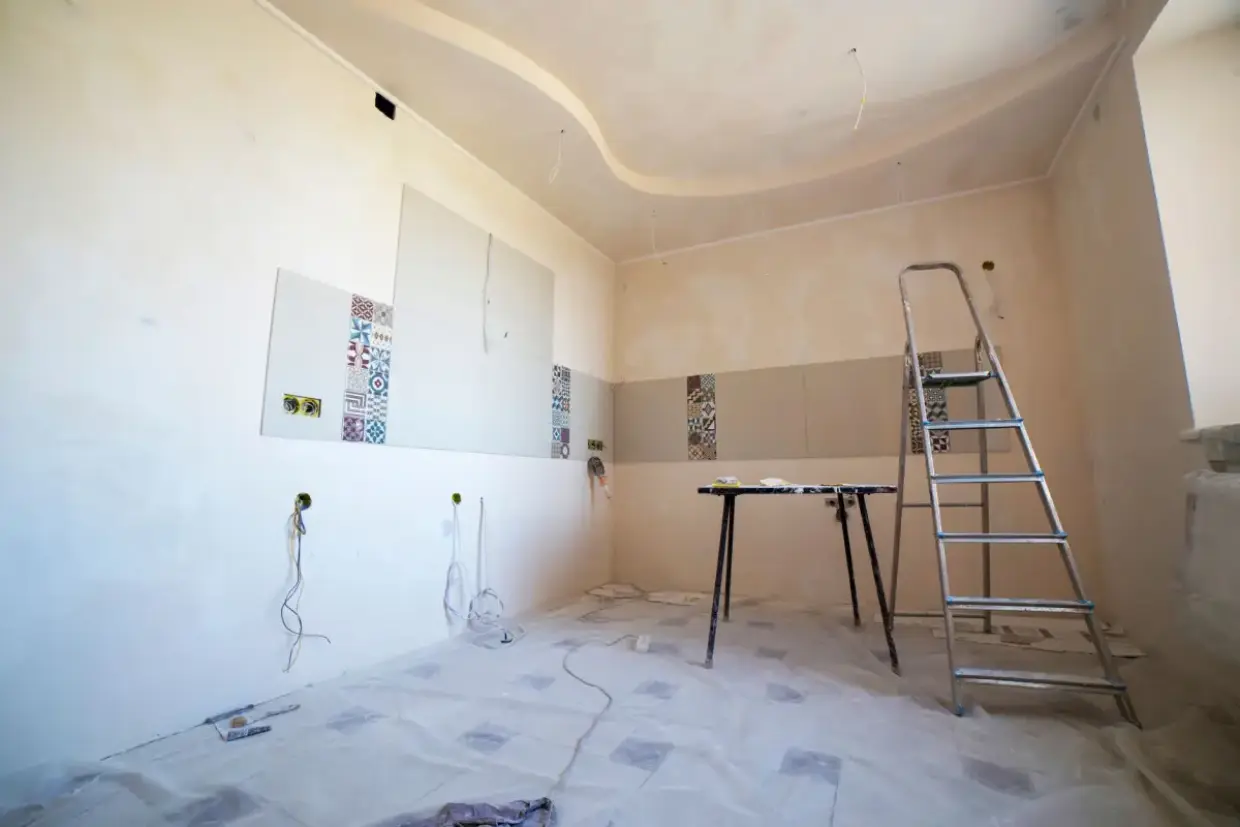
Ceiling Drywall Repair in Kenosha, WI — Cracks, Sagging and Damaged Ceiling Board
Ceiling cracks, sag, holes and loose board across Kenosha and Kenosha County, assessed at the framing and fasteners overhead before any compound goes on.
Ceiling Drywall Repair in Kenosha, WI
Kenosha Elite Drywall is your local resource for ceiling drywall repair throughout Kenosha and Kenosha County. We work with experienced drywall professionals who look at what is holding a ceiling up before deciding how to fix its surface.
Ceilings are the least forgiving drywall surface in a house, and it has nothing to do with skill. A ceiling is viewed from fifteen or twenty feet away in flat, even light, usually with a fixture washing across it — the exact condition that reveals a texture mismatch, a ridge of compound, or a plane that is not quite true. The same repair that would vanish on a wall announces itself overhead.
The second difference is structural. A wall carries its board against the studs; a ceiling holds its board up against gravity across an entire span, and every fastener is working. So ceiling damage is far more likely than wall damage to be telling you something about what is behind it — a fastener pattern that was too sparse, 1/2 inch board on framing spaced at 24 inches, or seasonal movement in the structure above.
That last one is genuinely regional. In a Wisconsin winter, roof truss top chords dry out in cold attic air while the bottom chords stay closer to the house's humidity, and the truss arches slightly upward. That lifts the ceiling away from interior partition walls and opens a clean crack along the wall-ceiling junction, which closes again in summer. It is a well-documented seasonal phenomenon rather than a structural failure, and filling it every spring is the wrong response.
What’s Included in a Kenosha Ceiling Drywall Repair Quote
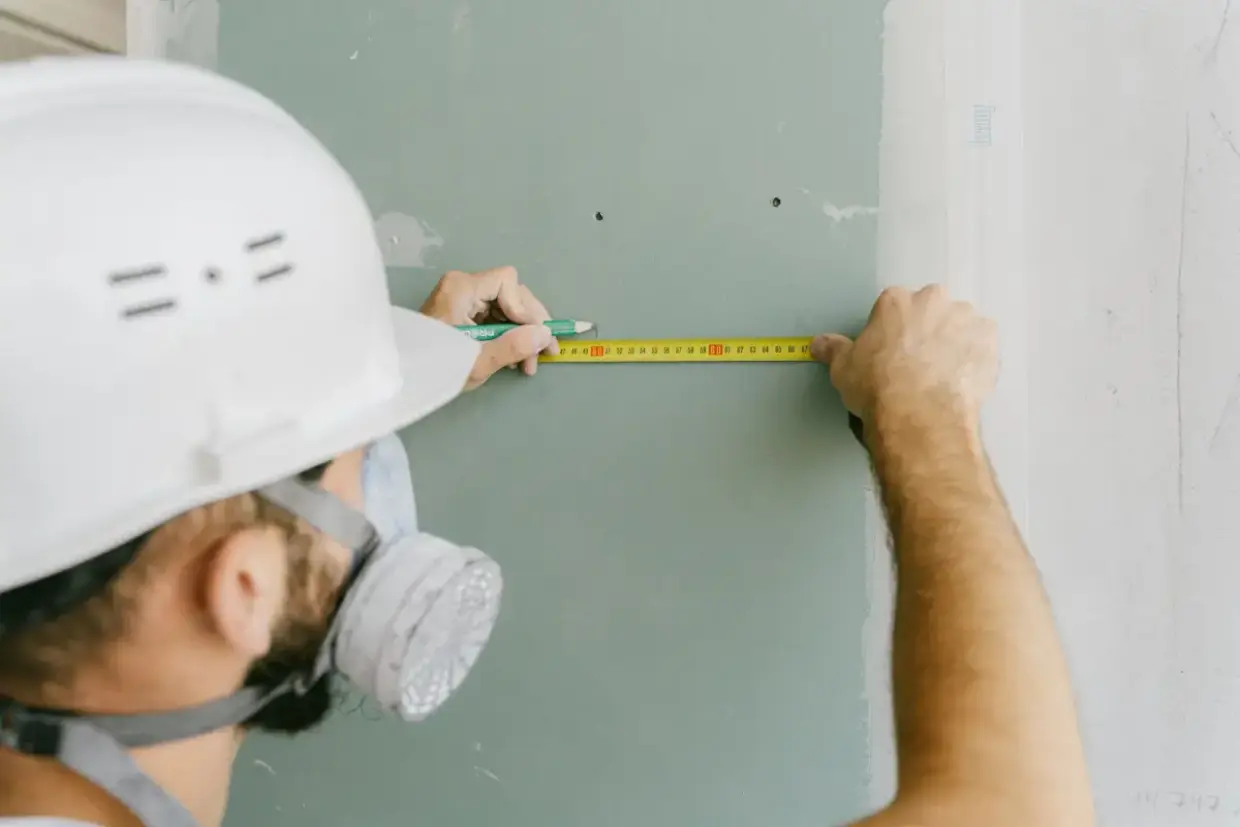
- Framing spacing, board thickness and fastener pattern checked before any surface work
- Crack pattern read for whether it indicates movement, fastening or seasonal truss lift
- Loose board refastened into solid framing rather than filled over
- Damaged sections cut back to joist centers so replacement board has bearing
- Sagging assessed against whether refastening or reboarding is the honest answer
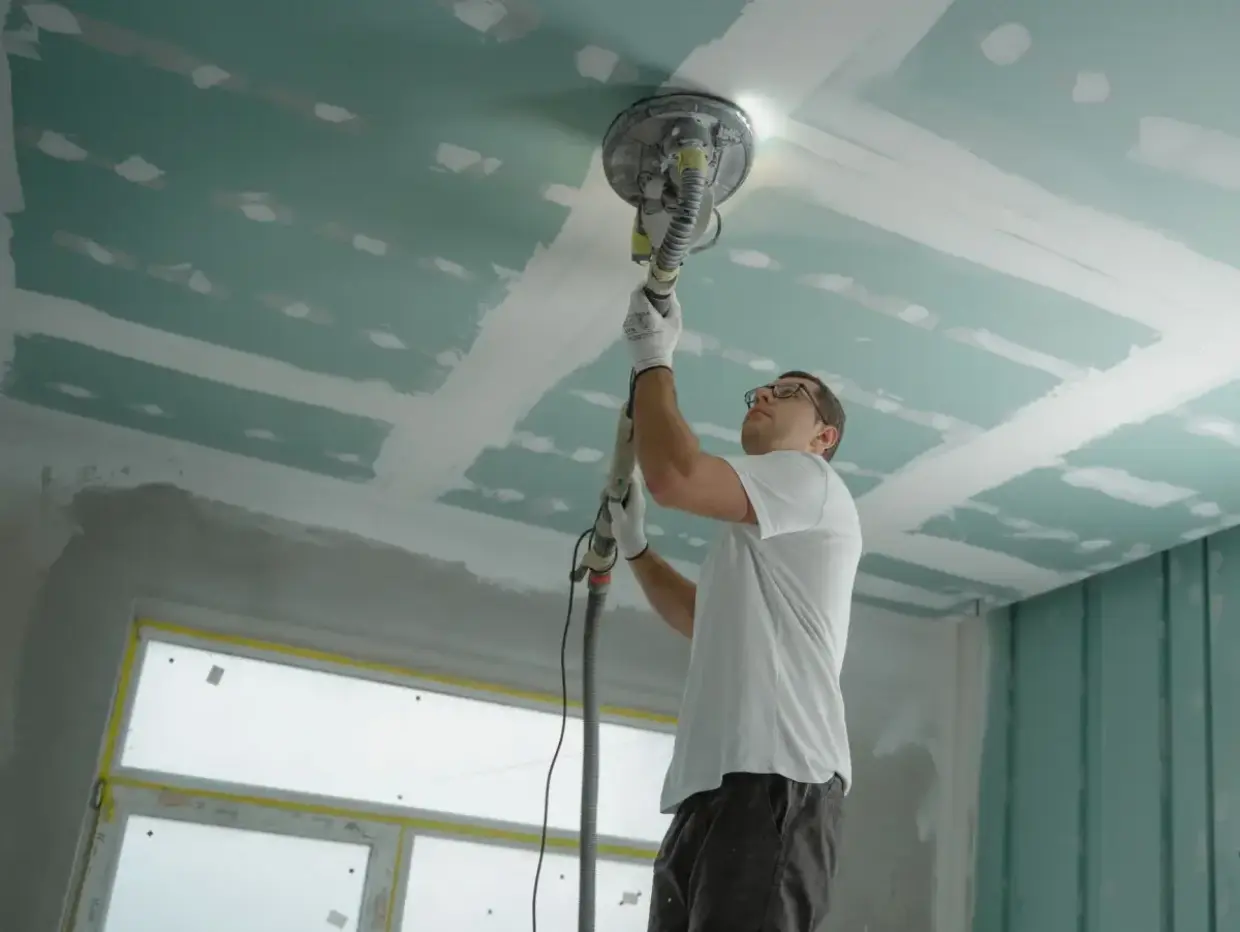
- Ceiling texture sampled and reproduced on scrap before it goes overhead
- Repairs primed so they do not flash under the room's own lighting
- Floors and furnishings protected, dust contained, area cleaned on completion
Ceiling Drywall Repair in Kenosha, WI
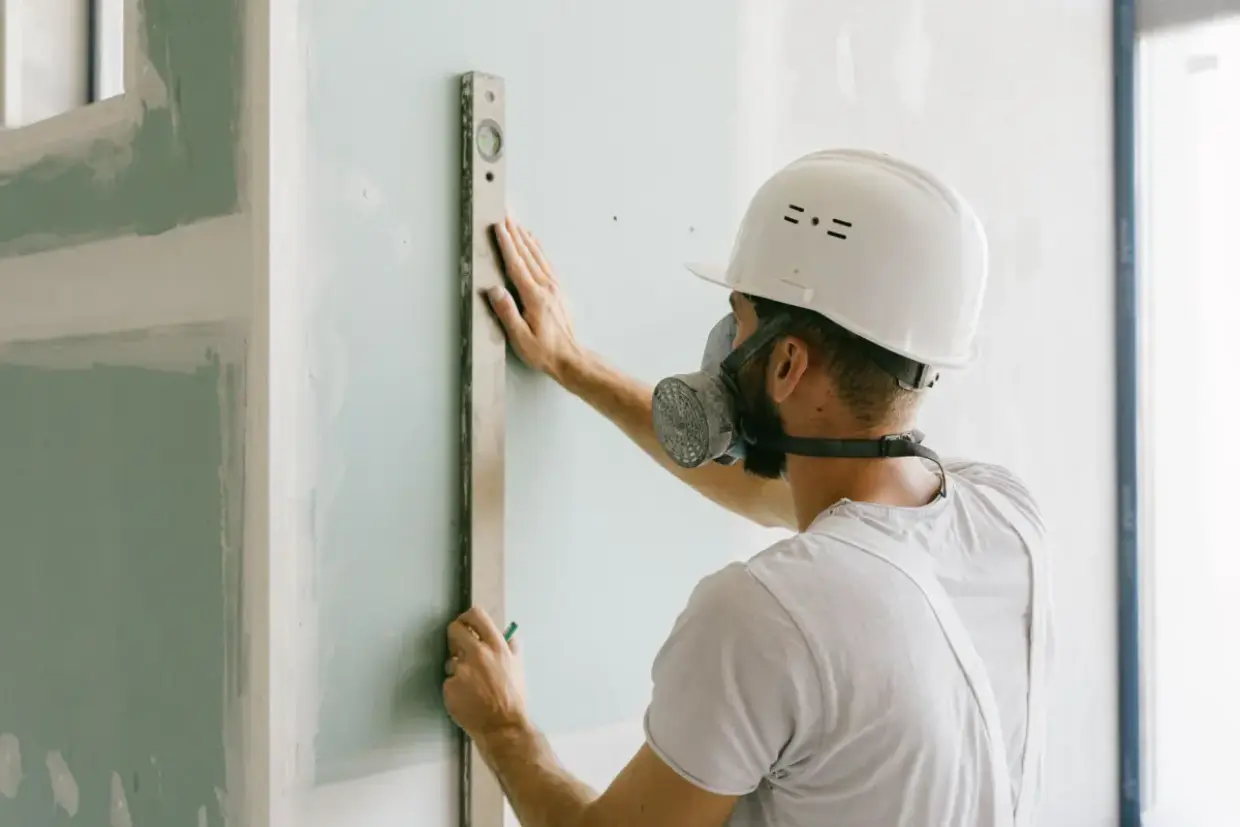
Ceiling Crack Repair
Cracks in a ceiling get read before they get filled, because the pattern usually names the cause. A crack that follows a seam is a taping or movement issue at that joint. A crack tracking cleanly along the junction between ceiling and an interior wall, especially one that opens each winter and closes each summer, is almost certainly truss uplift and needs a detail that allows movement rather than compound that resists it. Cracks radiating from a corner point to stress concentration. Filling all three the same way means two of them come back.
Sagging Drywall Ceiling Repair
A ceiling that dips between joists has usually been over-spanned or under-fastened. The most common cause locally is 1/2 inch board installed on framing at 24-inch centers, which is thin enough to develop a permanent set over years — and it appears often in homes from the 1960s and 70s, which is a large share of Kenosha's housing. Where the board is otherwise sound, refastening into the joists with proper screws can pull a mild sag back. Where the panel has taken a permanent set or the gypsum core has been softened, refastening pulls the fasteners through rather than the board up, and reboarding is the real answer.
Ceiling Hole & Patch Repair
Openings left by removed light fixtures, ceiling fans, access cuts from plumbing or HVAC work, and damage from something hitting the ceiling from above. Ceiling patches need more support than wall patches for the obvious reason: gravity works against them continuously. That means cutting back to joist centers where possible so the new piece can be fastened, or installing backing where it cannot. A ceiling patch floating on tape alone will crack around its perimeter, and it will do it faster than the same patch would on a wall.
Loose & Damaged Ceiling Drywall
Board that has separated from its framing, which shows as visible movement when pressure is applied, popped fastener heads in rows, or a seam that has opened along a joist line. The cause is usually fasteners that lost their grip — nails rather than screws in older work, or screws driven too deep and through the paper face, which removes most of their holding power. The fix is fastening into solid framing at proper spacing, setting or removing the failed fasteners, and then coating. Filling over a loose section leaves the movement in place under new compound.
When a Ceiling Needs Replacing Instead of Repairing
The point where repair stops being the economical choice. That threshold arrives when the board has taken a permanent set, when a large area has been repeatedly patched and no longer reads flat under the room's lighting, when the panel thickness was wrong for the framing spacing to begin with, or when the gypsum core has lost integrity. Reboarding a ceiling is a bigger job than patching one, but a ceiling that gets patched every second year costs more across a decade and never looks right in the meantime. Getting an honest answer on this at the assessment stage matters more than on any other drywall surface.
Signs You Need Ceiling Drywall Repair
- A visible dip or wave when you sight along the ceiling from a doorway
- A crack along the ceiling-to-wall junction that opens in winter and closes in summer
- Rows of popped fastener heads following the joist lines
- Board that moves or flexes when pressure is applied
- A seam that has opened along a joist line
- A ceiling that has been patched several times and no longer reads flat
How Ceiling Drywall Repair Works
- 1
Check What Is Holding the Ceiling Up
The assessment starts overhead rather than at the damage. Joist or truss spacing is established, board thickness is checked, and the fastener pattern is examined for spacing and for whether screws were set below the paper or driven through it. Where attic access exists, what is above the ceiling gets a look as well — insulation weight, any storage sitting on the joists, and whether anything has been wetted. This step answers the question that determines everything else: is the surface damaged, or is the assembly under-built? A ceiling repaired without answering that is a repair with a scheduled return date.
- 2
Read the Crack Pattern
Cracks are diagnostic if you look at where they run. Along a seam means the joint itself. Radiating from a corner means stress concentration. Running cleanly along the line where the ceiling meets an interior partition, seasonal in character, means truss uplift — the top chord dries in cold attic air while the bottom chord does not, the truss arches, and it lifts the ceiling off the wall for the winter. That one is not repaired by filling it. The proper response is a detail that lets the movement happen out of sight, usually by allowing the ceiling edge to float and covering the junction with trim fastened to the ceiling rather than the wall.
- 3
Refasten, Patch or Reboard
Loose board gets refastened into solid framing with screws at correct spacing, set just below the paper without tearing it. Damaged sections are cut back to joist centers so the replacement has real bearing, or backing is added where cutting to a joist is not practical. Where the panel has taken a permanent set, refastening is not attempted, because pulling on a deformed sheet drives fasteners through the face rather than lifting the board. In that case the section comes down and goes back with the correct thickness for the framing spacing — which frequently means 5/8 inch board where 1/2 inch was originally used.
- 4
Match the Texture and Prime
Ceiling texture is matched with more care than wall texture, because the viewing conditions are harsher. The existing pattern is sampled, reproduced on scrap, and adjusted for thinning and spray pressure until the sample matches rather than approximates. Only then does it go up. Then the repair is primed, since fresh compound absorbs paint differently and an unprimed patch reads as a dull shape under a ceiling fixture even when the color is right. Finally the repair is checked from the doorway in the room's own light — the way it will actually be seen — rather than from a ladder two feet away.
What Does Ceiling Drywall Repair Cost in Kenosha, WI?
- Whether the fix is surface repair, refastening, or reboarding a section
- Ceiling height and the staging or lifts required to reach it
- Texture type and how difficult the existing pattern is to match
- Size of the affected area and whether damage is localized or spread
- Whether fixtures, fans or trim have to be removed and reinstalled
- Furniture protection and containment in an occupied room
- Whether the underlying cause — spacing, thickness or fastening — needs correcting
| Service | Cost Per Sq. Ft. | Typical Job |
|---|---|---|
| New Drywall Installation | $1.50 – $3.00 per sq. ft. | $1,000 – $3,254 per project |
| Small Patch or Hole | $75 – $350 per patch | $300 – $500 for a contractor visit |
| Larger Wall Repair | $500 – $800+ per patch | Scales with how much board comes out |
| Ceiling Repair | $297 – $472 per hole | $220 – $1,300 for the full ceiling |
| Water-Damaged Drywall | $500 – $2,500+ | Depends how far the moisture travelled |
| Texture Matching | $150 – $450 per patch | Runs 30 – 40% above a smooth finish |
Based on 2026 national cost-guide data from Angi, HomeGuide, and Homewyse. Kenosha County rates land above or below these ranges depending on ceiling height, access, and how much board has to come out. The largest single swing here is whether a wall turns out to be plaster rather than drywall, which changes the method rather than just the quantity. You get a firm number after someone sees the job.
Ceiling work costs more than the equivalent wall work for reasons that are physical rather than arbitrary: everything is done overhead, material has to be supported while it is fastened, and the finish standard is higher because the viewing conditions are less forgiving. The cost question that matters most is repair against reboarding. Patching a ceiling that is under-built keeps the price low per visit and high across a decade, and an assessment that names which situation you are in is worth more than a slightly lower number on the first repair.
What to Look for in a Kenosha Ceiling Drywall Repair Contractor
They Look at the Framing First
Board thickness against joist spacing decides whether a ceiling was ever going to hold. Someone who checks that before quoting is diagnosing rather than filling.
They Recognize Truss Uplift
A seasonal crack along the ceiling-wall junction is a known winter phenomenon here, not a defect. Filling it every spring is the wrong answer and a contractor who says so is worth listening to.
They Sample the Texture Before Going Overhead
Ceilings are seen in flat light from across the room, the harshest condition for a texture match. Testing on scrap first is what makes the repair disappear.
They Tell You When to Reboard
A ceiling that has taken a permanent set will not come back with refastening. Being told that plainly costs less over ten years than being sold three more patches.
Residential & Commercial Ceiling Drywall Repair
Residential
Residential ceiling repair covers cracks, sag, holes, loose board and the diagnostic work of deciding whether the surface or the assembly is the problem. In Kenosha's 1960s and 70s housing the most common finding is 1/2 inch board on 24-inch centers, which is a thickness question rather than a workmanship one.
Commercial
Commercial ceiling repair carries different constraints — rated assemblies, occupied space, access around grid and mechanical systems, and work programmed around business hours. That is covered on the commercial drywall repair page.
When Ceiling Drywall Repair Isn’t the Right Call
- Ceilings stained or softened by an active leak. The source gets fixed and the cavity dries first — see water-damaged drywall repair.
- Popcorn texture you want removed rather than repaired, which is its own job and starts with asbestos testing.
- Plaster ceilings over wood lath, common in Kenosha's older core, which fail differently and are covered on the plaster repair page.
- Ceilings where the board thickness is wrong for the framing but the budget only allows for patching. The sag will return.
- Addresses outside Kenosha and Kenosha County.
Frequently Asked Questions
- Why does a crack appear along my ceiling every winter and close in summer?
- That is almost certainly truss uplift, and it is common in this climate. Roof trusses have a top chord exposed to cold, dry attic air and a bottom chord sitting in the warmer, more humid conditions just above your ceiling. The two dry at different rates, the truss arches upward slightly, and it carries the ceiling away from your interior partition walls. Come summer the conditions equalize and it settles back. It is a movement issue rather than a structural failure, and the right fix allows the movement rather than fighting it with compound.
- My ceiling sags between the joists. Can it be pushed back up?
- Sometimes, and it depends on whether the board has taken a permanent set. If the sag is mild and the panel is otherwise sound, refastening into the joists with proper screws can bring it back. If the board has held the curve for years, or the gypsum core has been softened by moisture at any point, refastening tends to pull the screws through the face rather than lift the sheet. That is the point where reboarding the section is the honest answer, usually in 5/8 inch board if the framing is on 24-inch centers.
- What thickness of drywall should a ceiling be?
- It depends on the framing spacing. On joists or trusses at 16 inches on center, 1/2 inch board is generally acceptable. At 24 inches on center, 5/8 inch is the right call, and 1/2 inch will develop a visible sag over time even when it was installed well. A lot of ceilings built in the 1960s and 70s used 1/2 inch at 24-inch spacing, which is why sag shows up in that era of housing far more than in newer construction.
- Why do ceiling repairs show more than wall repairs?
- Because of how they are lit and viewed. A ceiling is seen from across the room in flat, even light, often with a fixture throwing light along its surface, which is the condition that reveals any variation in plane, texture or sheen. A wall is usually seen closer, from more angles, with light coming from several directions. The same standard of work reads as invisible on a wall and noticeable overhead, which is why ceiling texture matching is tested on scrap rather than attempted directly.
- Is it cheaper to patch a ceiling or replace it?
- Patching is cheaper per visit, essentially always. Whether it is cheaper overall depends on whether the assembly is sound. If the board thickness suits the framing and the fastening is adequate, patching is the right economics. If the ceiling is under-built, each patch buys a couple of years and the wall around it keeps moving, and reboarding once costs less across a decade than five patches and a ceiling that never quite looks right in between.
- Do you have to remove the light fixture to repair around it?
- Usually, where the damage is close to it. Working compound up to a fixture edge leaves a visible ring, and the fixture canopy rarely covers as much as people expect once fresh compound is around it. Taking it down, repairing the full area properly and reinstalling gives a much better result. It also gives a chance to check the box and the fastening, which is worth doing on a ceiling old enough to have loose fasteners elsewhere.
Learn More
- Gypsum Association — technical guidance on gypsum panel spans, thickness and ceiling applications
- USG Construction Handbook — manufacturer documentation on ceiling framing spacing and fastener requirements
- Wisconsin DSPS Uniform Dwelling Code — the state code governing residential ceiling and framing construction
Need Ceiling Drywall Repair in Kenosha, WI?
Tell us what’s going on and get an on-site estimate — no charge for the visit, and no obligation to book the work.
Get My Free Estimate